Okay, let’s talk about the trek you’ve been planning since you saved that one Triund sunrise reel three months ago.
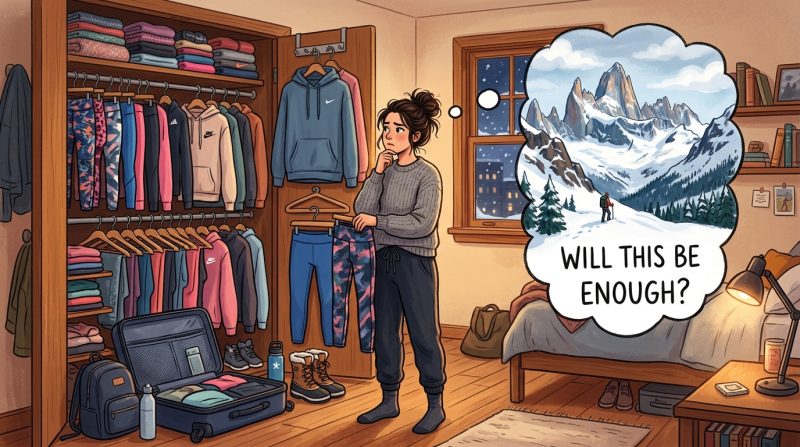
You’ve booked it. You’ve told everyone. And now you’re staring at your wardrobe wondering if your gym leggings and a hoodie are going to cut it at 12,000 feet.
Spoiler: they’re not. But don’t panic — you don’t need a mountaineering degree to dress right for the Himalayas. You just need to understand layering, and once you get it, you’ll never overpack (or underpack) for a trek again.
Let’s get into it.
Why Layering Is the Only Rule That Actually Matters
Here’s the thing nobody tells you upfront: Himalayan weather doesn’t pick a personality and stick with it. You could be sweating in a t-shirt at 9am and reaching for gloves by 4pm, all on the same trail.
That’s why “one warm jacket” thinking fails. You need a system you can add to and strip off as the mountain throws weather at you — and that system has three parts.
Layer 1: Base Layer (Your Skin’s Best Friend)
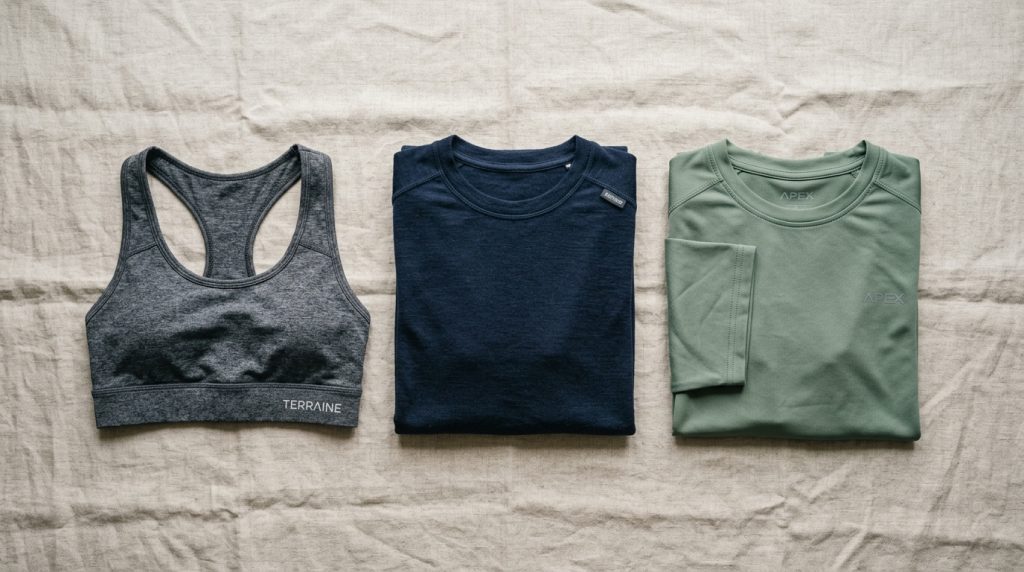
This is what touches your body, so its only job is to keep you dry. Sweat that doesn’t evaporate is what makes you cold, fast.
Go for: Moisture-wicking polyester, nylon blends, or merino wool
Avoid at all costs: Cotton. It holds onto sweat and turns into a cold, clingy nightmare the second you stop moving
Pack 2–3 full-sleeve quick-dry tees or thermals depending on trek length
A good sports bra in moisture-wicking fabric matters here too — this is not the trek to test a new one for the first time
Layer 2: Mid Layer (Your Warmth Bank)
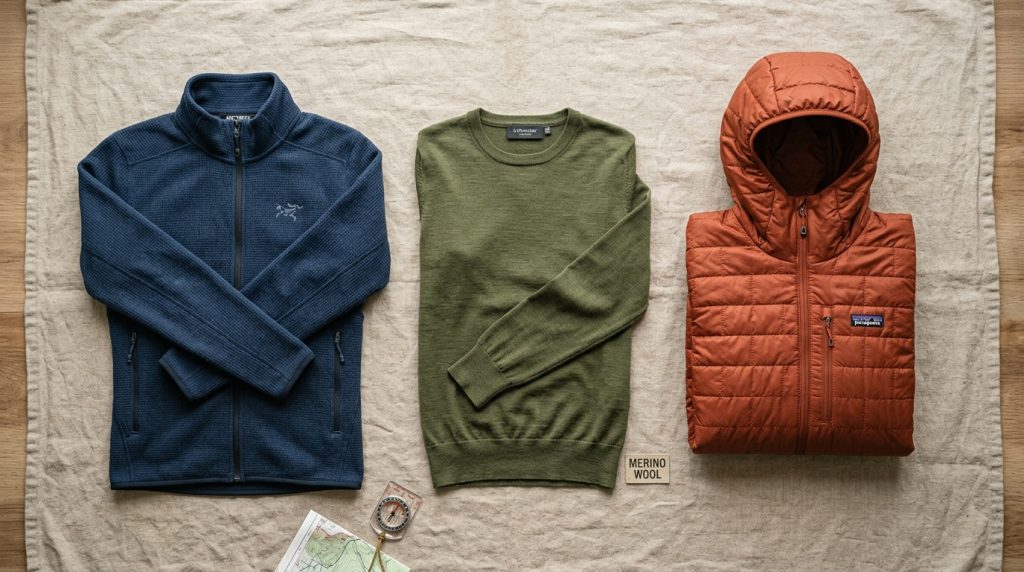
This is where the actual insulation happens. Think of it as trapping your body heat like a cozy little bubble.
Go for: Fleece jackets, light wool sweaters, or synthetic-fill jackets
A zip-up fleece is clutch because you can vent it open mid-climb without fully removing it
For colder/higher-altitude treks, add a packable down or synthetic puffer for evenings at camp
Layer 3: Outer Shell (Your Armour)
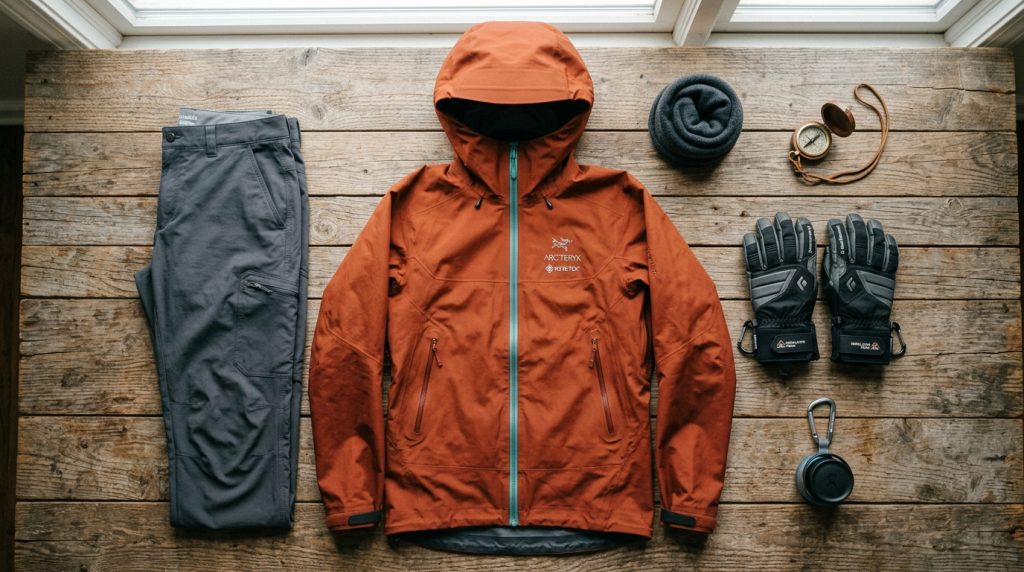
This is your protection from wind, rain, and snow — non-negotiable no matter the season.
Go for: A windproof, water-resistant or waterproof jacket with a hood
Look for one with underarm vents so you don’t overheat while climbing
Pair with water-resistant trek pants — not your everyday joggers, which soak up water and take forever to dry
What Goes Below the Waist
Trek pants over leggings is the unspoken styling cheat code nobody talks about enough.
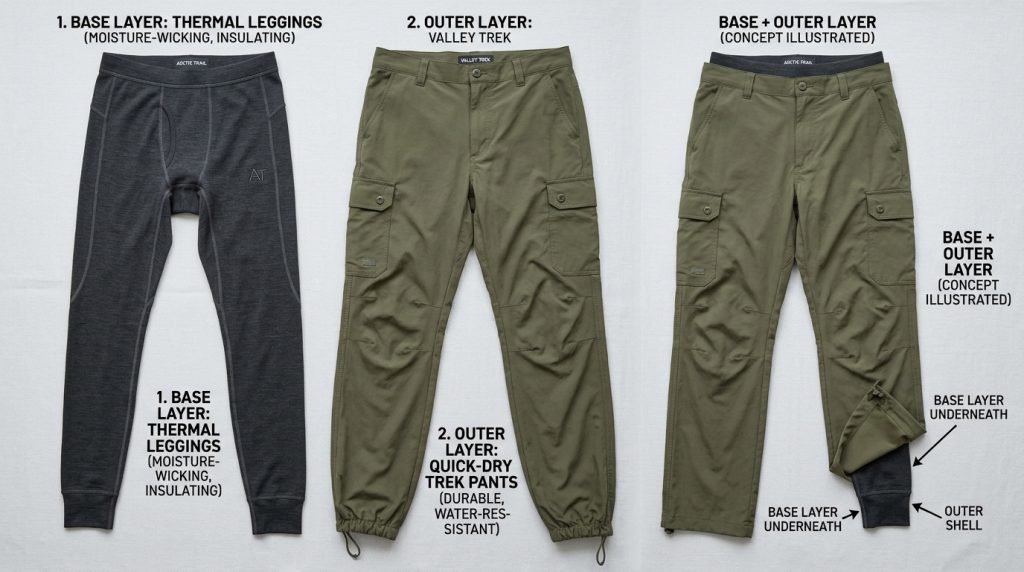
Base: Thermal leggings (skip cotton tights — same sweat problem as above)
Outer: Quick-dry, stretchable trek pants — cargo-style ones with zip pockets are genuinely useful, not just an aesthetic
Carry one spare pair in case the first gets soaked crossing a stream (it will happen)
Don’t Skip These — Your Extremities Will Thank You
The cold attacks your head, hands, and feet first, so don’t treat these as an afterthought.
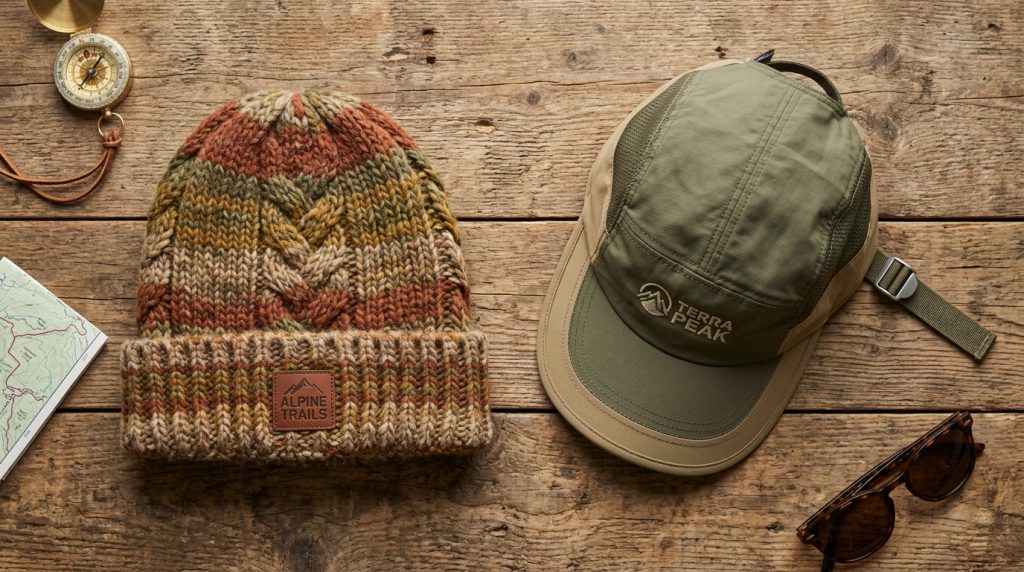
Head: A warm woolen cap or beanie, plus a sun cap for daytime glare
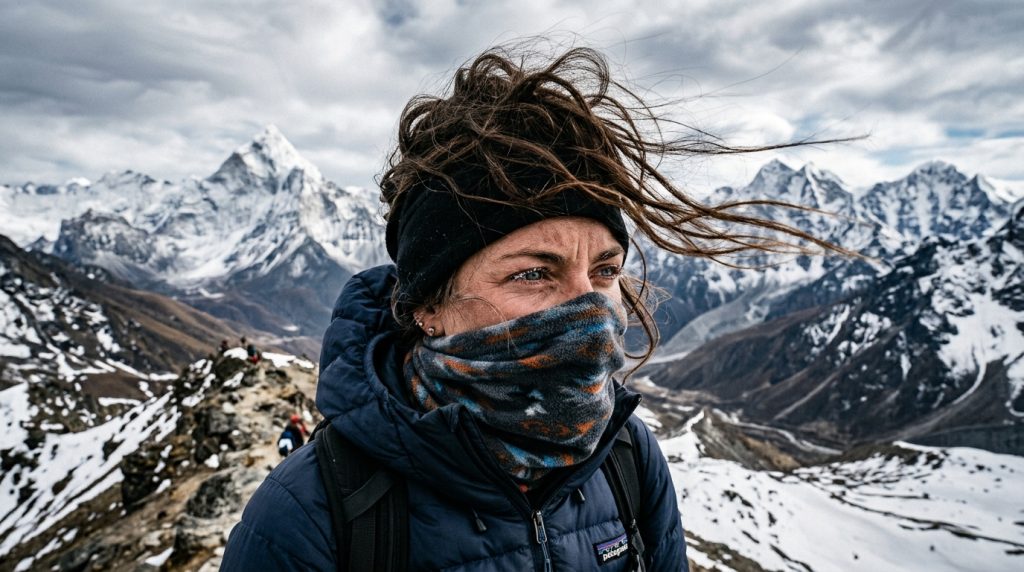
Neck: A buff or scarf you can pull up over your nose when the wind picks up
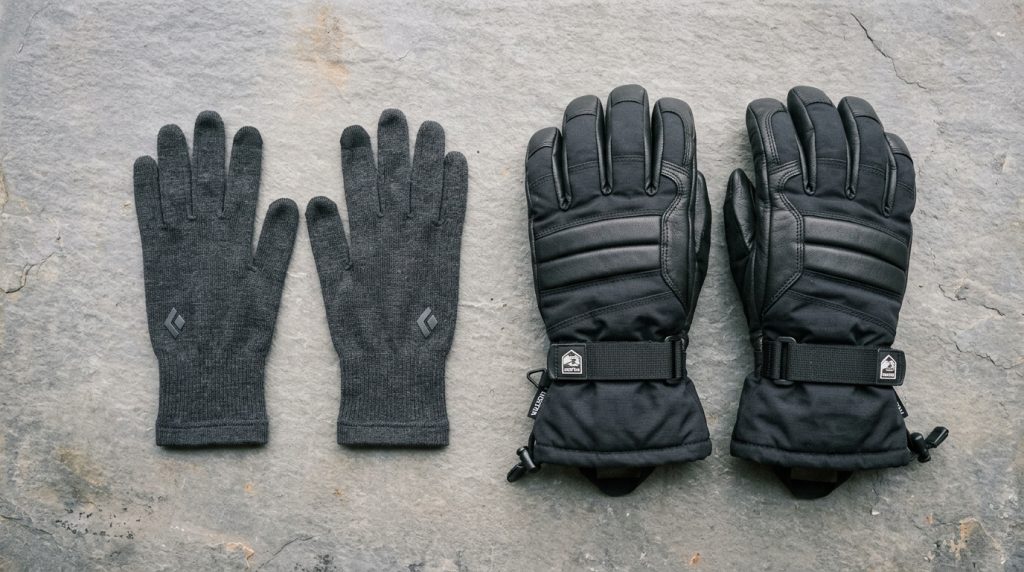
Hands: Liner gloves for milder days, waterproof insulated gloves for higher altitudes
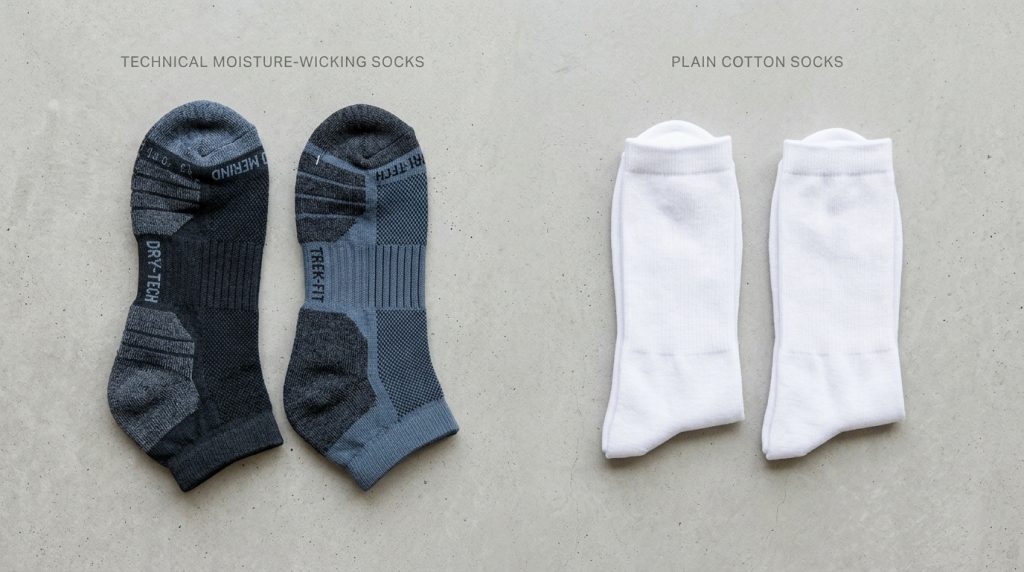
Feet: Moisture-wicking trekking socks (carry 2–3 pairs minimum) — cotton socks here are how blisters happen
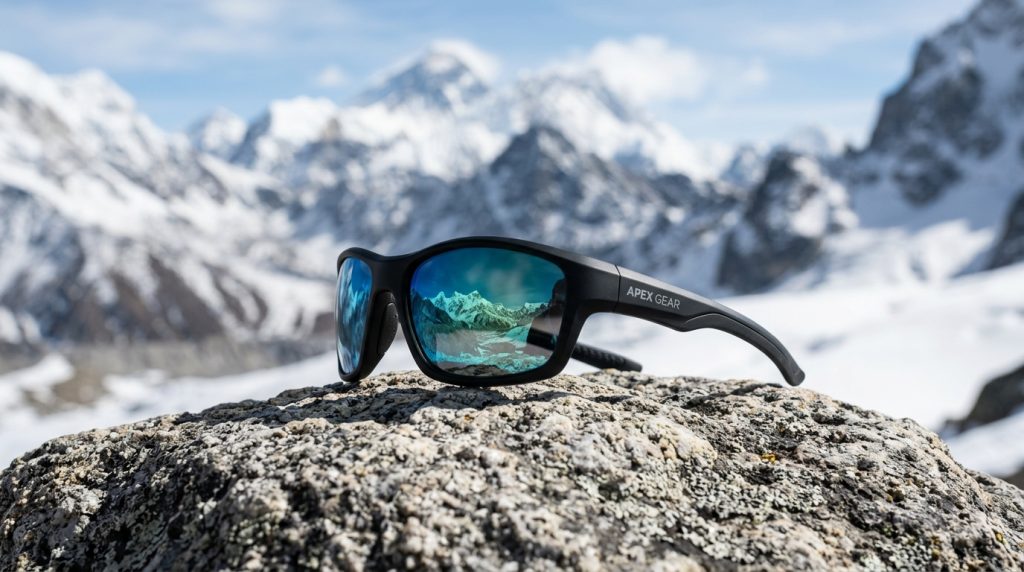
Eyes: UV-protected, wraparound sunglasses. Snow blindness is real and happens faster than you’d think
💡 Komal’s Tip
Everyone obsesses over what to wear while walking and completely forgets what to wear after. The second you stop moving, your sweat-damp clothes turn ice-cold against your skin — and that’s when people actually get sick.
Always carry one fully dry, warm outfit packed separately just for camp: thermal bottoms, a dry top, warm socks, and a cap. Change into it the moment you reach your stop, even before you eat or take photos. Your future, non-shivering self will thank you.
A Quick Note on Looking Put-Together (Yes, Really)
You don’t have to choose between function and feeling like yourself. Pick a base layer and fleece in colors you actually like — there’s no rule saying trek layers have to be muddy beige. A rust fleece or a deep teal puffer photographs beautifully against snow and mountains, and it costs you nothing extra to pick the color that makes you happy in your trip photos.
Budget-Friendly Picks for Indian Trekkers
You don’t need premium imported gear for most Indian Himalayan treks. These are solid, wallet-friendly starting points.
Decathlon
Genuinely trek-tested and budget-kind. The go-to for your core layering system.
Shop DecathlonWildcraft
A reliable Indian brand for the pieces that take the most abuse on the trail.
Shop WildcraftMyntra
Solid for base-layer activewear — the layers closest to your skin. Time it with the big sales.
Shop MyntraAjio
Good hunting ground for thermal innerwear — stack coupons during sales for the best deals.
Shop AjioFAQs
Do I really need to avoid cotton completely?
Yes — especially for anything touching your skin directly (base layer, socks, underwear). Cotton absorbs sweat and dries painfully slowly at altitude, which is exactly what leads to chills and illness on the trail.
How many layers do I need for a moderate Himalayan trek?
Most moderate treks need 2–3 layers worn at once during the day (base + mid, shell added as needed), with extra mid and outer layers packed for evenings and higher altitude sections.
Can I wear leggings instead of trek pants?
Leggings work fine as a base layer underneath, but they’re not enough alone — you need a quick-dry, weather-resistant trek pant over them for durability and protection from brush, rocks, and rain.
What’s the most overlooked item people forget to pack?
A dry change of clothes for camp. Most people pack for the walk and totally forget what they’ll wear once they stop moving — which is when the real cold sets in.
You’ve Got This
Layering sounds technical until you actually do it once — then it just becomes second nature, like knowing how to pack a suitcase. Get your three layers sorted, protect your extremities, and don’t forget that dry outfit for camp.
Now go book that trek you’ve been eyeing, and come back and tell me how it went.
Found this helpful? Save it for your next trek planning session, and drop a comment with the trek you’re prepping for — I’d love to know!
Suggested Internal Links:
- Capsule Wardrobe Essentials (for the “pack light, layer smart” philosophy crossover)
- Summer Skincare Routine (natural link for a future “skincare for trekking/sun exposure at altitude” angle)
- A future “Trekking Outfits That Don’t Look Like Gym Clothes” post (styling-forward companion piece)