A quick note before we start: This post covers fashion, styling, self-care, and wellness. It is not medical advice. PMOS is a real hormonal condition that deserves proper diagnosis and care from a gynecologist, endocrinologist, and dermatologist. Please build your medical team. Everything in this guide is meant to sit alongside that care, not replace it.
Let me ask you something.
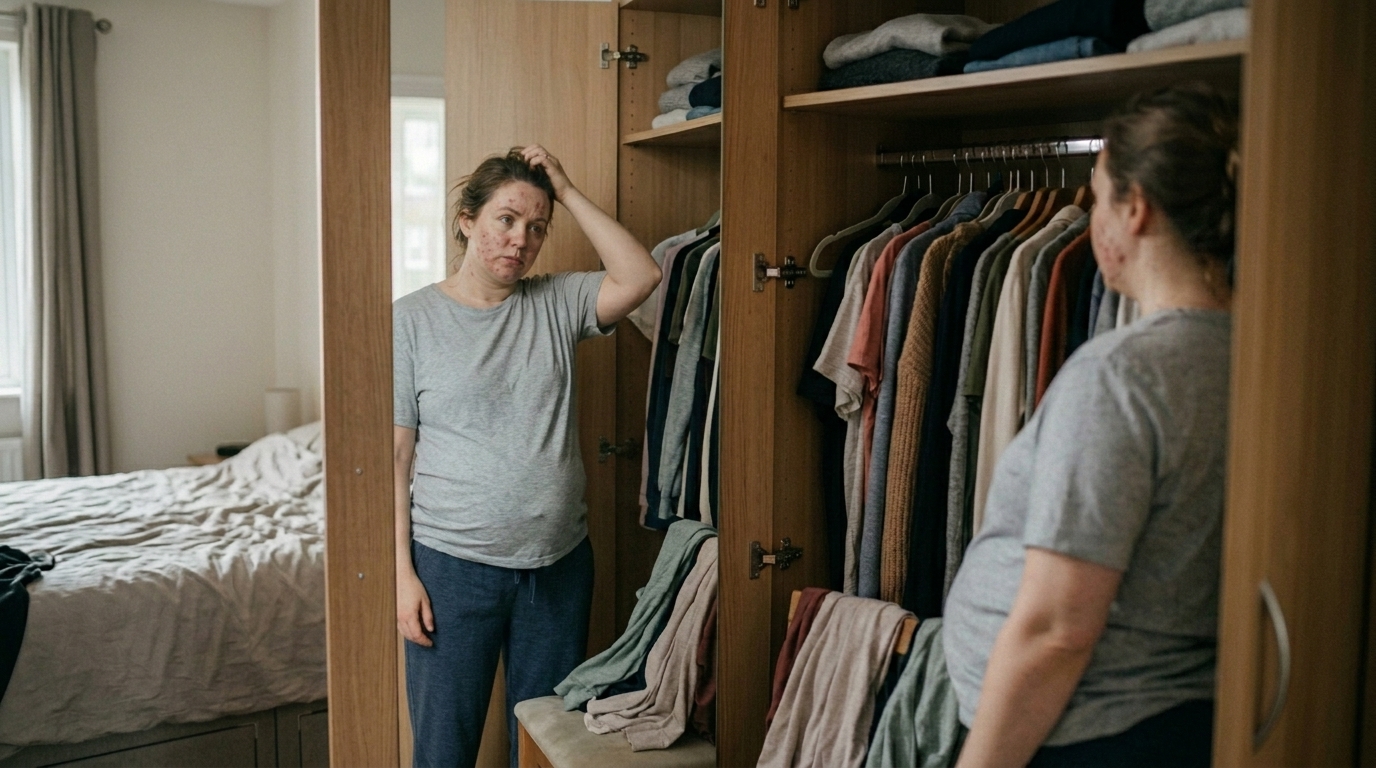
Have you ever stood in front of your wardrobe at 8am — clothes everywhere, mirror in front of you — and felt like nothing fits right? Not because your wardrobe is bad. But because your body doesn’t feel like yours right now?
If you’ve been navigating PCOS — or PMOS, as it’s now officially called — that moment probably happens more than you’d like. The skin that broke out overnight. The hair that’s thinner than it was six months ago. The bloating that arrived out of nowhere and made your favourite jeans unwearable by noon.
This post is for you. Not the “love yourself unconditionally no matter what” version that sounds beautiful but feels useless at 8am. The real version. With actual tips, actual outfit formulas, actual skincare ingredients, and a colour therapy guide that I genuinely believe will change how you start your day.
But first — let’s talk about the name change. Because it just happened, and it matters more than you might think.
And before we go any further — I want to tell you something.
I’m navigating PMOS too.
Not in a “I figured it all out and now I’m here to guide you” kind of way. In a “some mornings are genuinely hard and I’m still learning what works for my body” kind of way. The wardrobe frustration, the skin that has its own unpredictable agenda, the exhaustion that shows up without warning — I know what that feels like from the inside, not just from research.
I wrote this guide because it’s the one I needed. And I’m sharing it because I know I’m not the only one standing in front of the mirror some mornings wondering where she went.
You’re not alone in this. Not even a little bit. 🌸
Wait — PCOS Has a New Name?
Yes. And honestly? It’s about time.
On May 12, 2026, a paper published in The Lancet officially renamed Polycystic Ovary Syndrome to Polyendocrine Metabolic Ovarian Syndrome — PMOS. The renaming was led by Professor Helena Teede at Monash University and supported by more than 50 patient and professional organisations globally, including the Endocrine Society.
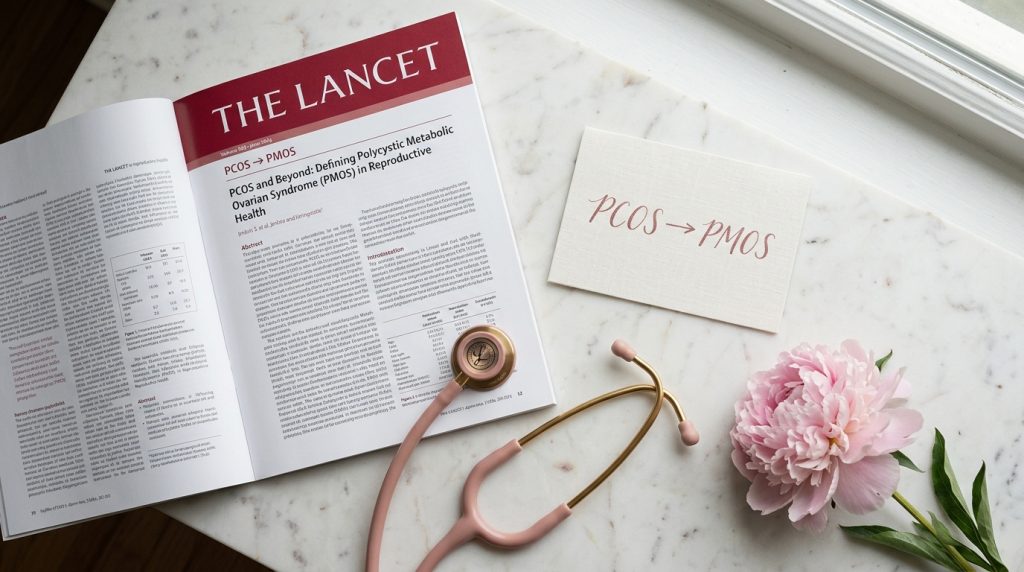
The old name, PCOS, reduced a complex hormonal disorder to a misunderstanding about ovarian cysts — and the “cysts” were never actually cysts. They were eggs whose development had been arrested as a result of broader endocrine disruption.
Here’s what was happening under the wrong name: in PMOS, there is too much insulin in many women’s bodies, and that insulin confuses the ovary into making too much testosterone. It’s the high testosterone that causes the symptoms. Weight changes, acne, hair thinning, irregular periods, fatigue — all of it traces back to this insulin-androgen cascade. Nothing to do with cysts. Never was.
The consequence of the wrong name was enormous. Because doctors would focus on the cystic presentation of the condition, patients could be dismissed if they didn’t present with cysts, even as they suffered from the metabolic and fertility issues linked with the condition. The World Health Organisation estimates that 70% of women with PMOS remain undiagnosed globally.
Seventy percent! Think about how many women have been told “your scan looks fine” and sent home to figure it out alone.
The new name now leads with hormones and recognises the metabolic dimension of the condition. It affects 1 in 8 women — more than 170 million people worldwide. This is not a niche condition. This is one of the most common hormonal disorders on the planet, finally getting a name that describes what it actually is.
If you’ve been dismissed, misdiagnosed, or told it’s “just stress” — this name change is medicine saying: we got it wrong. You deserved better.
You did. You still do.
What PMOS Actually Does — And Why It Is Not Your Fault
Before we talk about styling, let’s talk about the body you’re dressing. Because a lot of PMOS women have a combative relationship with theirs — and I think it helps to understand what’s actually going on before you decide how you feel about it.

PMOS affects multiple systems at once. Hormones fluctuate unpredictably. Insulin resistance means the body processes glucose differently, which affects energy, weight distribution, and inflammation. Elevated testosterone affects the skin’s sebaceous glands (hello, jawline acne), hair follicles (thinning at the crown, possible hirsutism), and mood.
The psychological effect is something we don’t speak about enough. Acne, facial hair, obesity, hair loss — all make a dent in happiness. Studies suggest women with PMOS experience body image distress that can lead to anxiety and depression.
That is not weakness. That is a documented medical reality.
Your body is not failing you. It’s navigating a complex hormonal condition without a roadmap. The least it deserves from you — from both of us — is a little patience and a lot of compassion.
Now. Let’s get dressed.
The PMOS Styling Playbook — Dressing for How You Actually Feel
Most styling advice is organised by body shape. Apple. Pear. Hourglass. Rectangle. As if bodies are static fruit that stay the same every day!
PMOS bodies don’t work like that. They fluctuate. Bloating comes and goes. Weight shifts. Energy levels determine what you can physically put on and take off. Skin has good days and difficult ones.
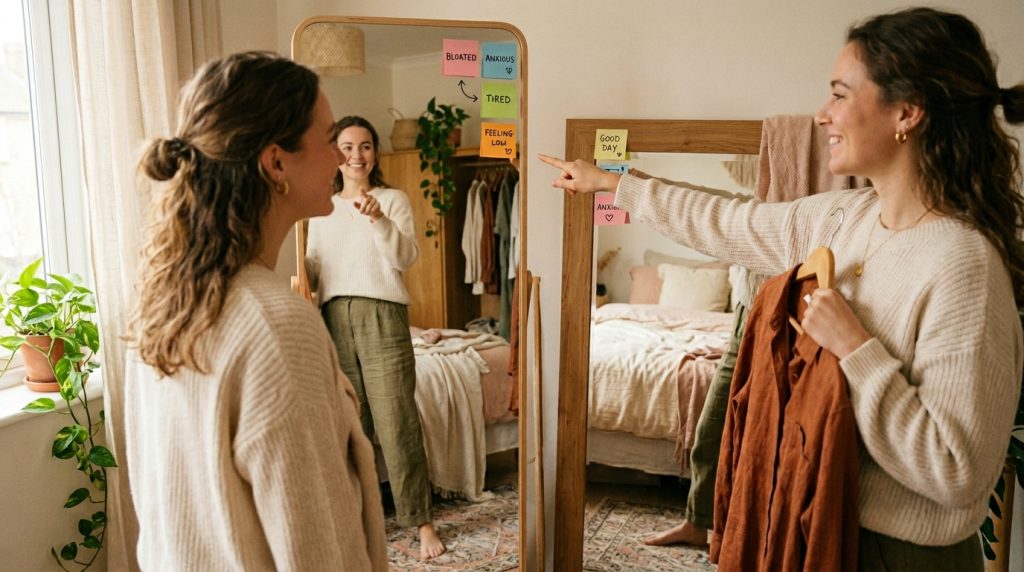
So this playbook is organised by symptom and mood — not by shape. Find where you are today and start there.
When Bloating Makes Your Waistband Feel Like the Enemy
This is the most common daily PMOS styling challenge. And it’s genuinely hard — not because you lack creativity, but because most clothes are built around a stable waistline, and PMOS doesn’t do stable waistlines.
The silhouette toolkit for bloating days:
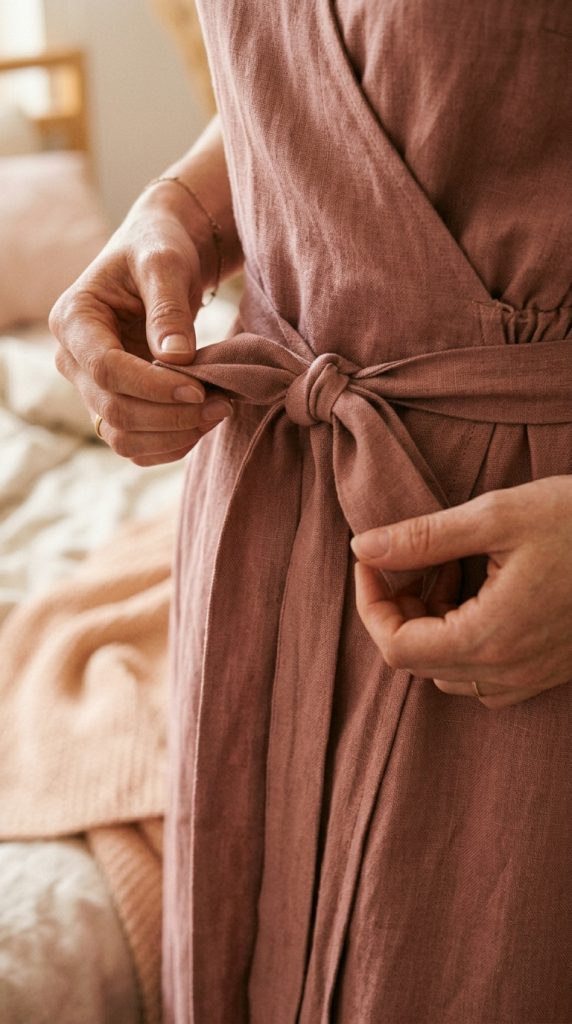
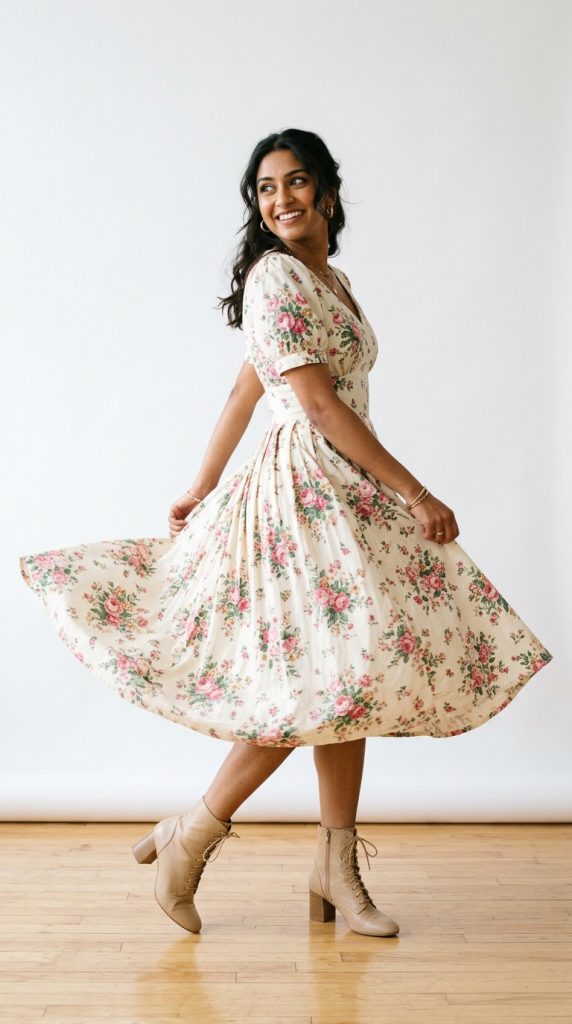
- Wrap dresses — the adjustable tie means the same dress fits your body on a difficult day AND a better day. Buy one good wrap dress and wear it on rotation
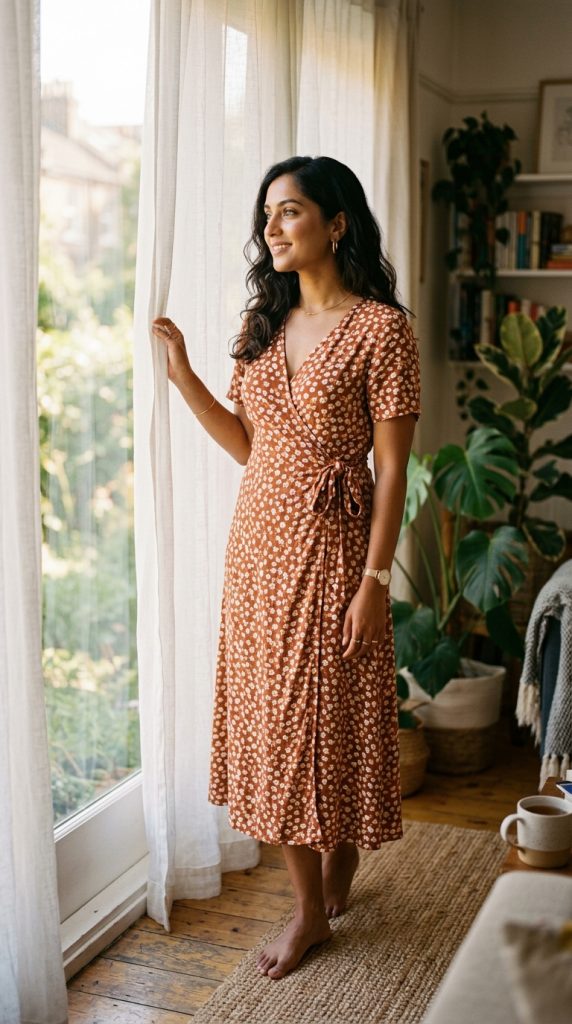

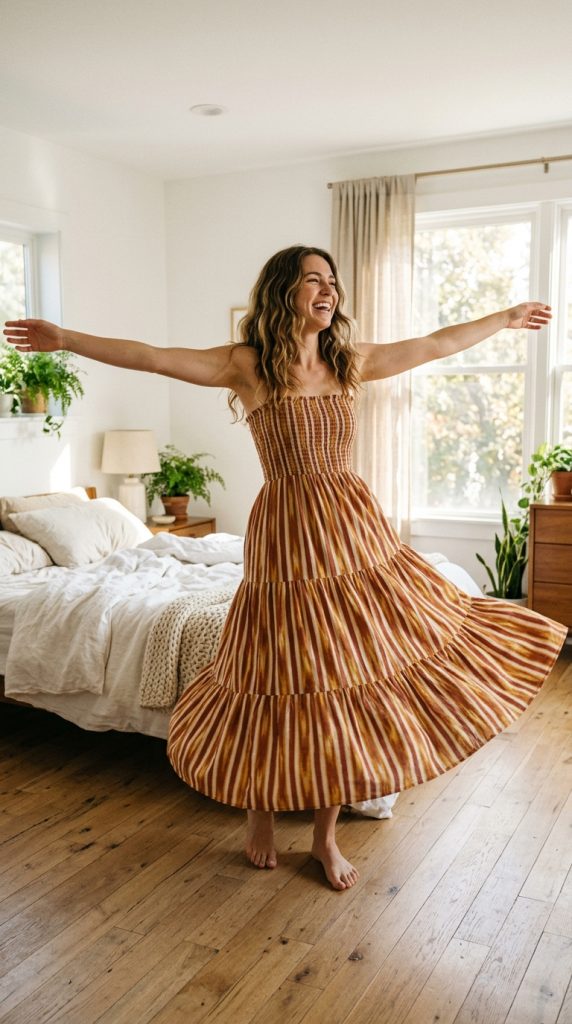
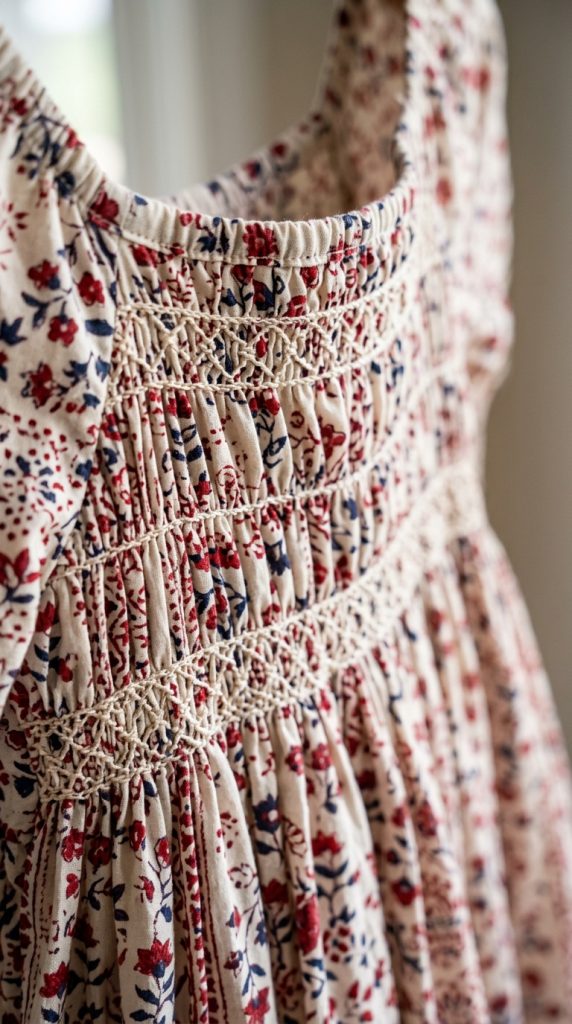
- Smocked bodices — the elastic gathering at the top fits your body right now, then relaxes beautifully below. No waistband involved

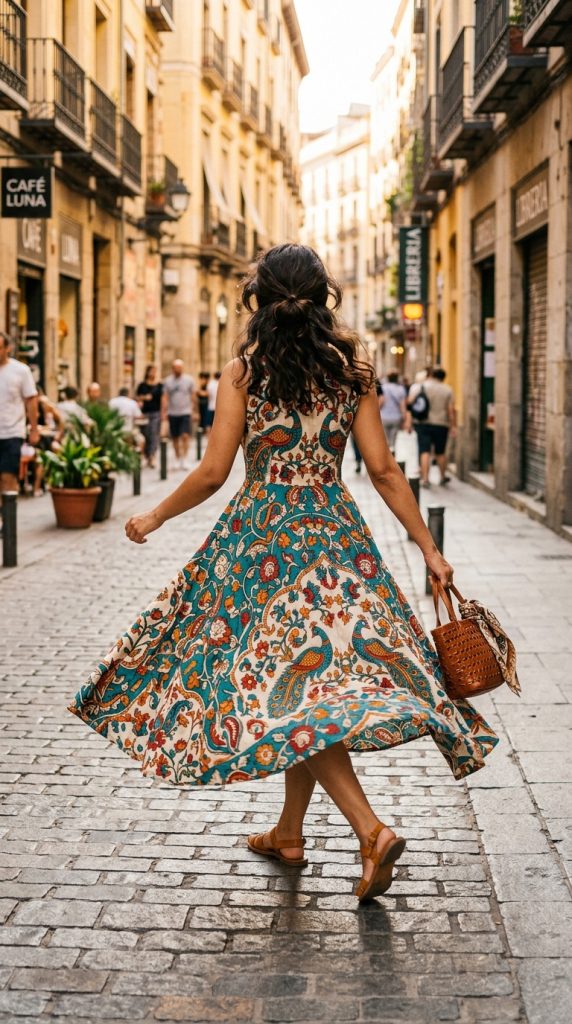
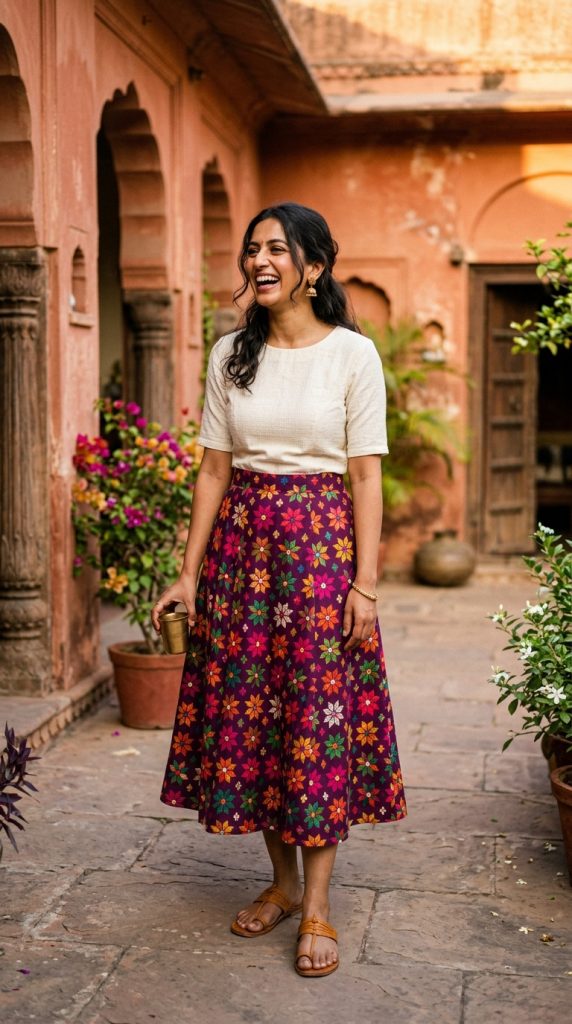
- A-line midi skirts and dresses — they create the illusion of a waist without touching it. High-waisted at the top, flared away from the body below
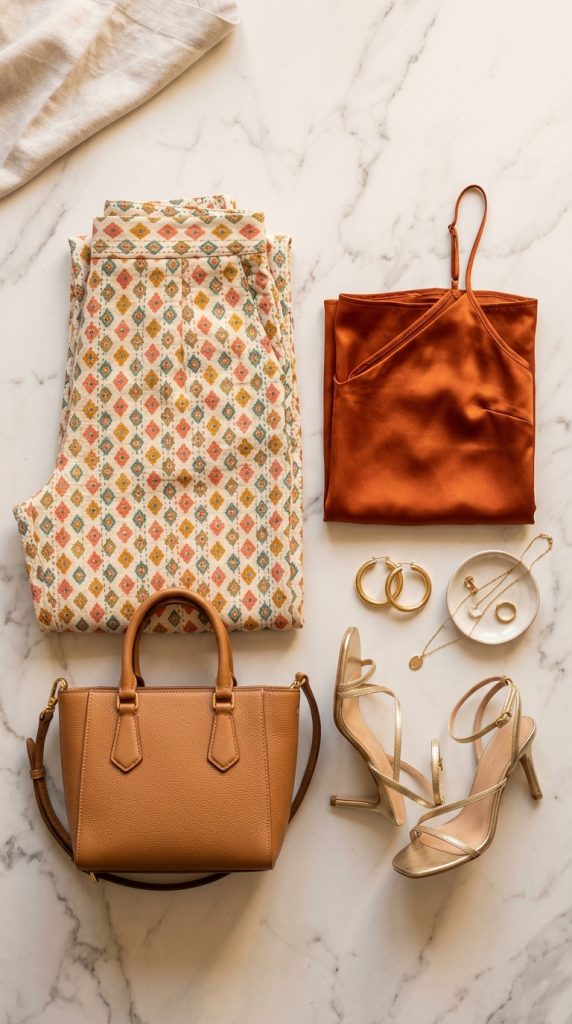
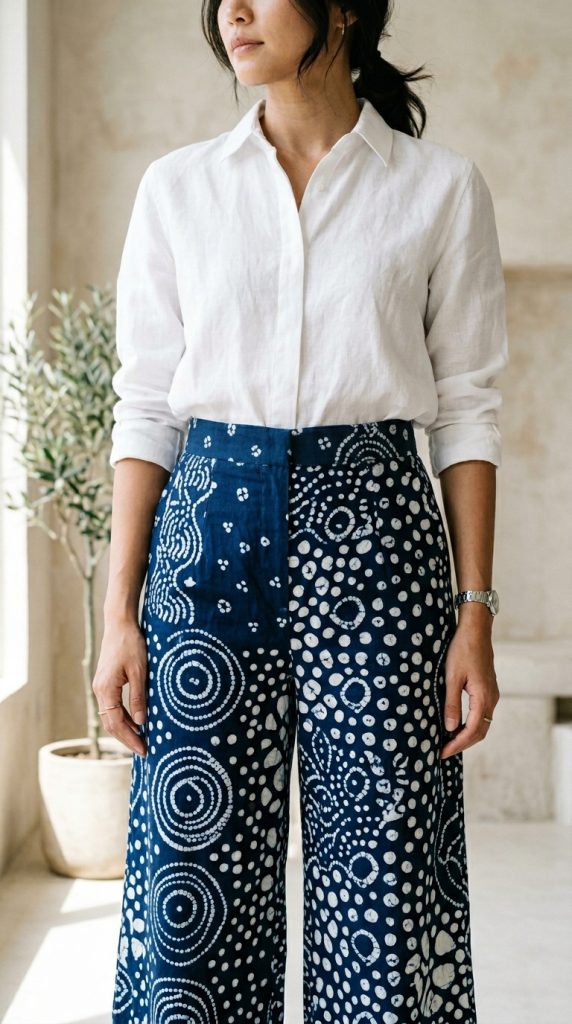
- Wide-leg trousers with an elasticated waist — styled well, these read as “intentional and chic,” not “comfortable because I had to be”

- Empire-waist styles — the waistline sits just below the bust, then the fabric falls freely. The most forgiving silhouette ever designed
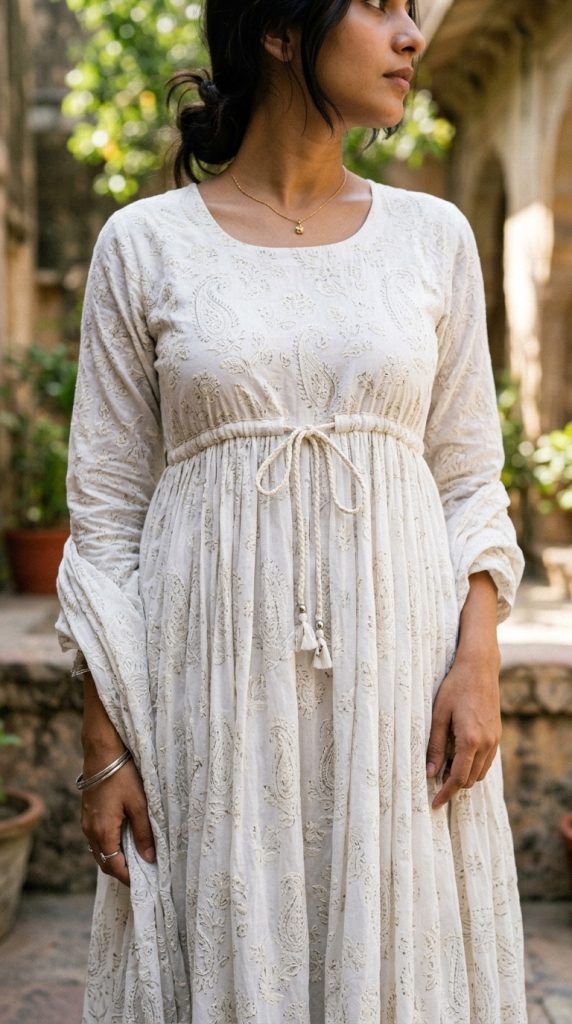

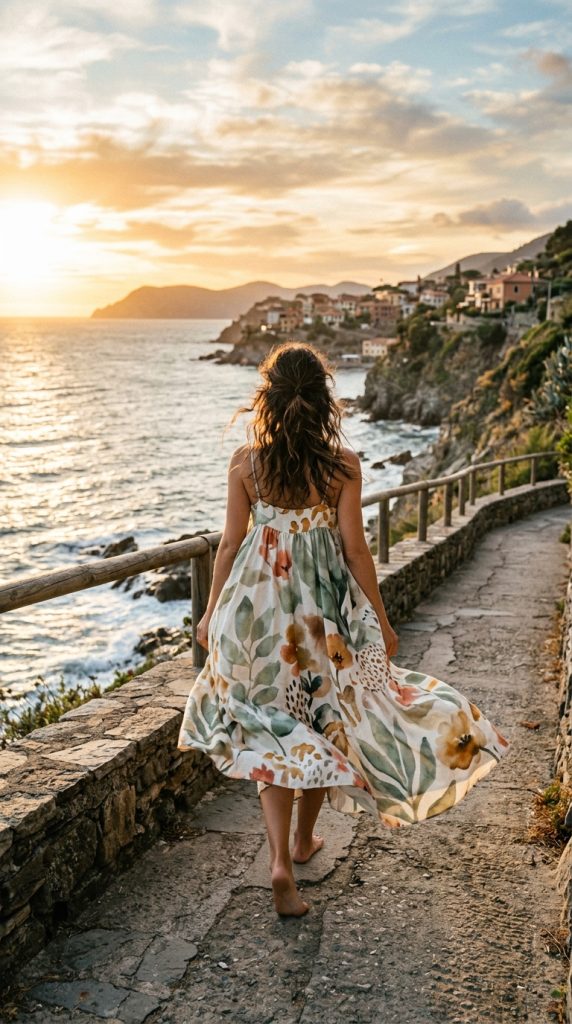
The fabric toolkit for bloating days:
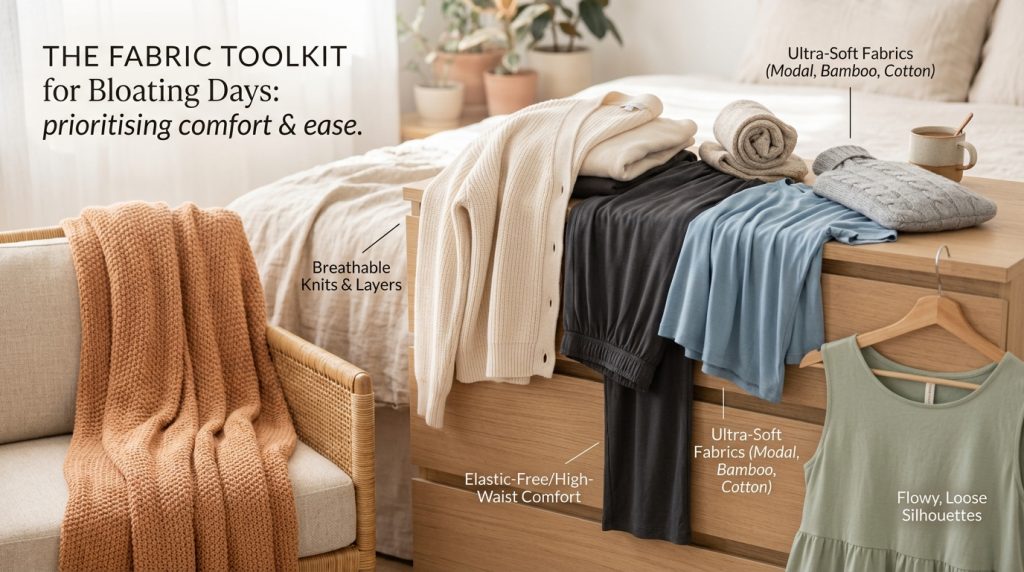
Cotton jersey, bamboo cotton, modal, mulmul, and linen-cotton blends all move with your body instead of fighting it. Avoid anything with rigid structure — structured denim, boning, stiff cotton poplin — on a difficult day. Save those for when you feel like yourself.
Indian picks:
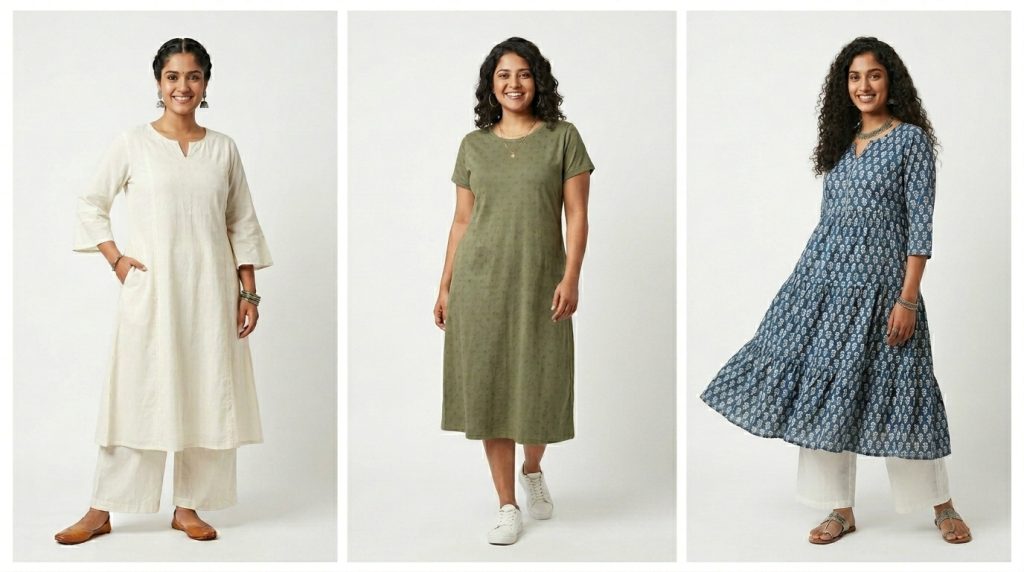
Fabindia’s mulmul kurta sets, W for Women’s jersey dresses, any cotton A-line from Global Desi.
Global picks:

Uniqlo’s modal range, COS’s A-line linen dresses, H&M’s smocked midi collection.
One thing I want to say clearly: you are not “failing to fit” your clothes. Your clothes are failing to fit you. That’s a design problem, not a you problem.
When Your Hair Isn’t Behaving the Way You Want It To
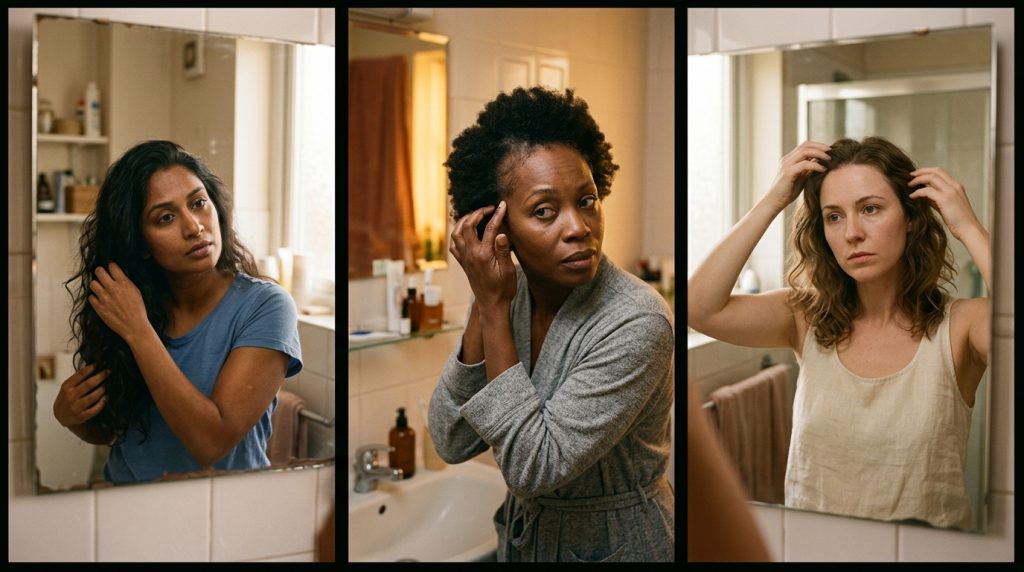
I’m going to be honest here, because nobody else seems to be: hair thinning is one of the most emotionally difficult parts of PMOS for a lot of women. It’s visible, it’s daily, and it touches something very deep about how we see ourselves as women.
So let’s actually fix it — or at least work with it.
Hairstyle tricks that genuinely help:
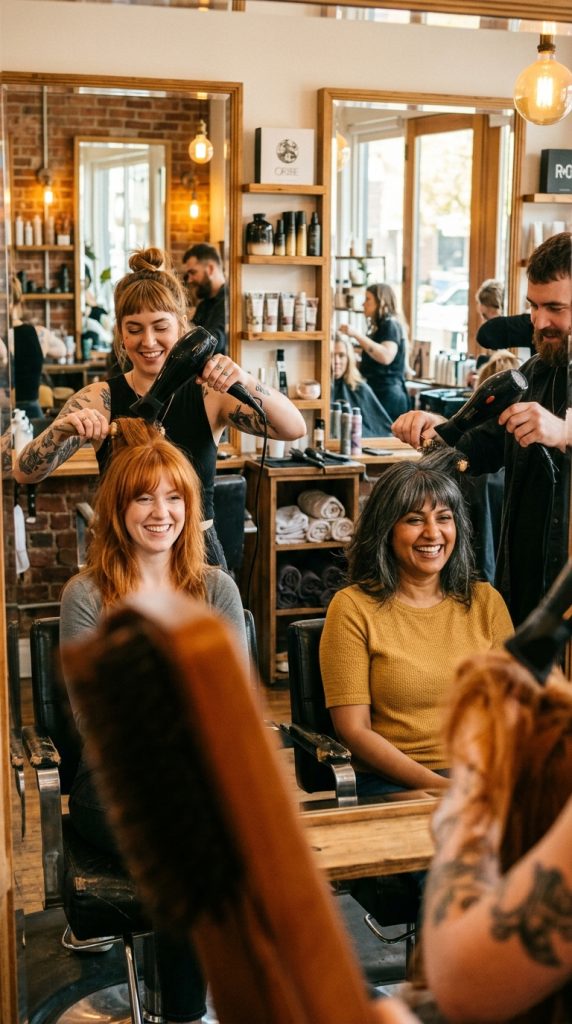
Curtain bangs — they frame the face beautifully AND disguise thinning at the hairline and temples. One of the smartest moves a PMOS woman with thinning hair can make.
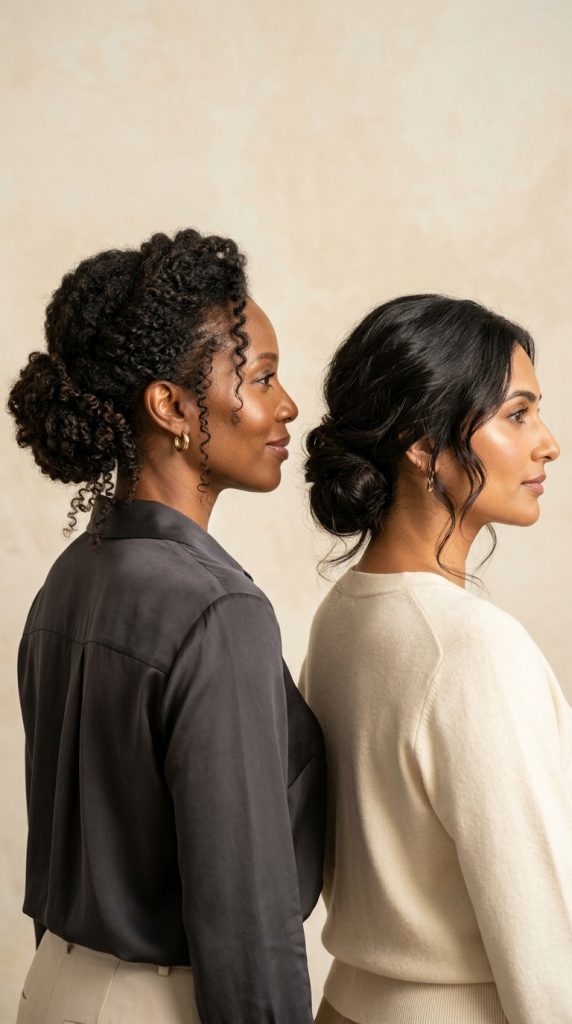
Soft, low buns — gathered at the nape of the neck with pieces left loose around the face. Creates volume at the crown where PMOS hair loss typically shows
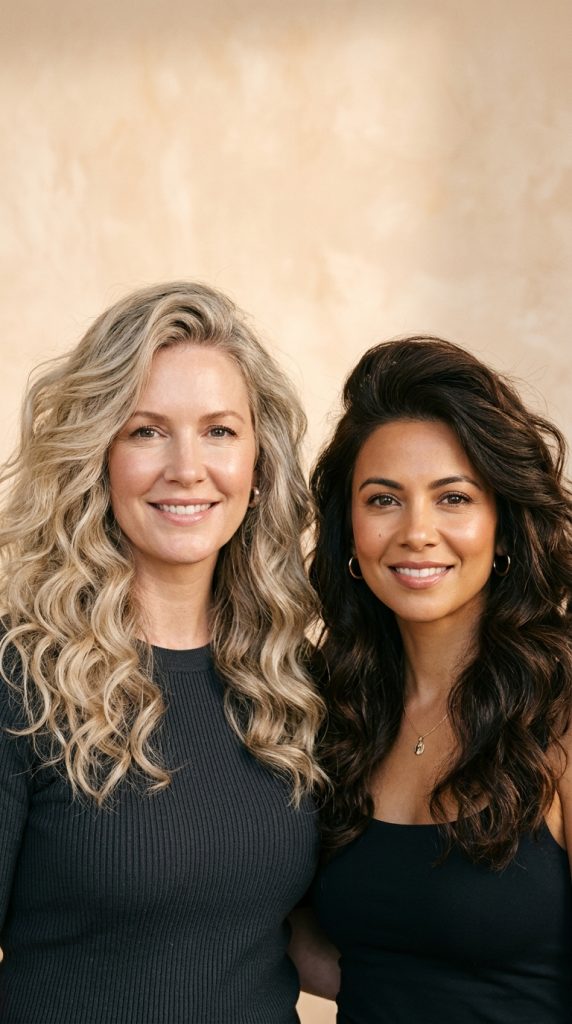
Loose waves — volume is everything. A diffuser and a lightweight volumising mousse can change how dense your hair looks dramatically
The middle-to-side part switch — if you’ve always worn a centre part, move it slightly off-centre. It breaks the pattern of thinning and creates instant volume
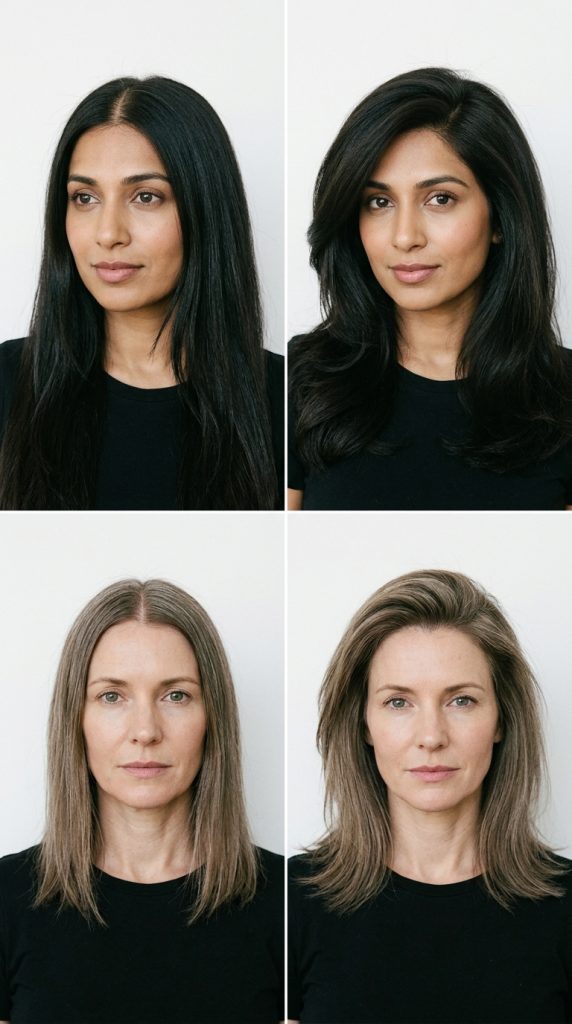
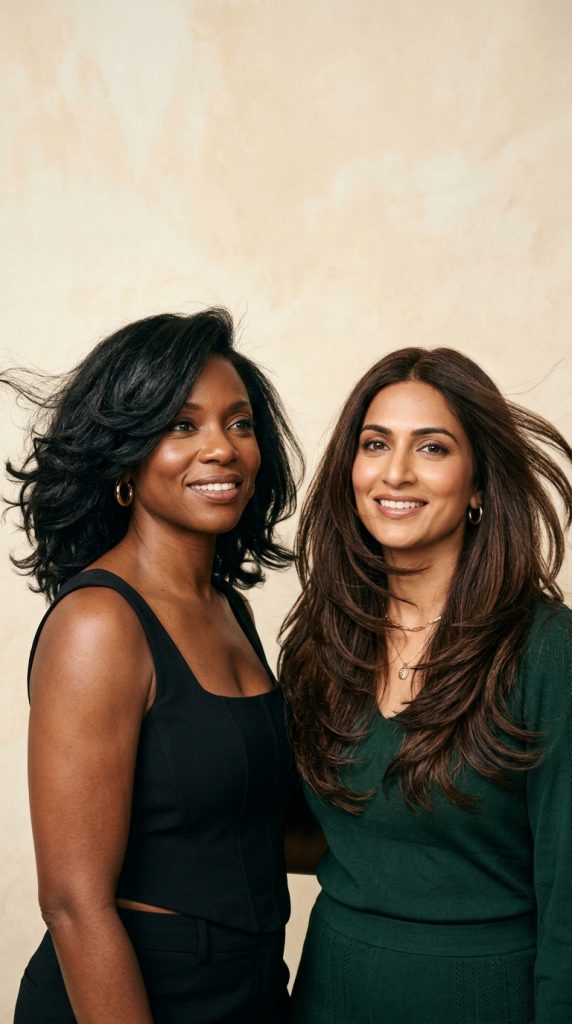
Strategic layers — ask your hairdresser for layers that move rather than lay flat. Movement reads as volume
Hair accessories that feel intentional, not compensatory:
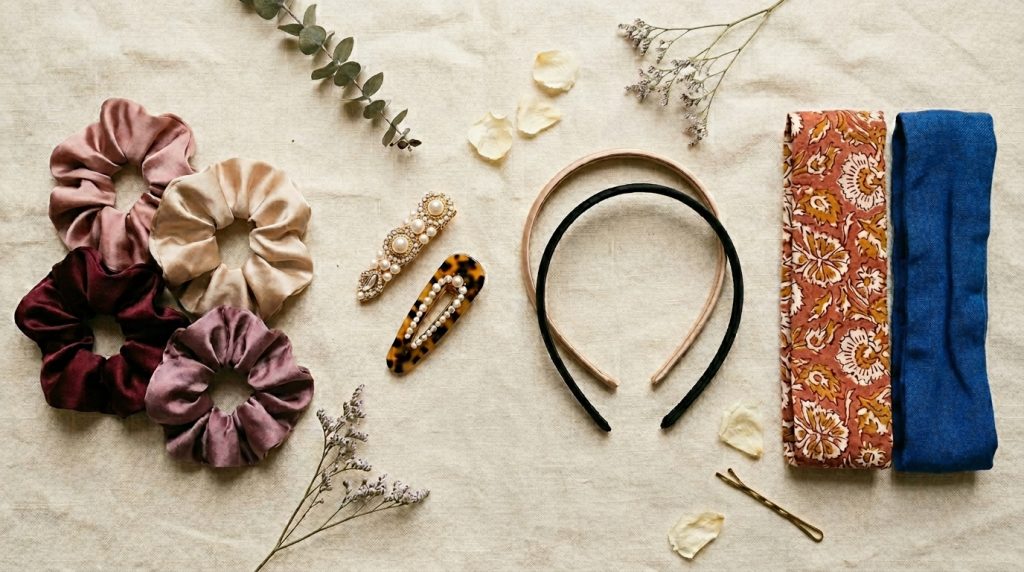
Silk and satin scrunchies (genuinely reduce breakage — this isn’t influencer nonsense, there’s real friction science behind it). Embellished clips that make a loose style look deliberate. Thin satin headbands that frame the face. Wide fabric bands in bold colours or prints.
Indian hair care rituals that actually work:
Bhringraj oil — massage into the scalp 30 minutes before washing, once or twice a week. The evidence for its effect on androgenic hair loss is real and longstanding. Amla oil — rich in Vitamin C, supports the hair shaft. Rice water rinse — a traditional South and Southeast Asian practice with documented evidence for improving hair elasticity and reducing breakage.
Global additions: Inositol supplementation has shown promising results for PMOS-related hair loss in multiple studies — but please talk to your doctor before adding it. Silk pillowcase — reduces friction and mechanical breakage while you sleep. A genuinely worthwhile purchase.
When Your Skin Is Having a Whole Moment
Hormonal acne from PMOS is different from regular acne. It clusters around the jawline, chin, and neck. It’s often deep, cystic, and painful rather than surface-level. It doesn’t respond well to the standard “wash your face more” advice — because it’s not caused by dirt. It’s caused by androgens.
Understanding this matters before you build your skincare routine. You’re not fighting teenage acne. You’re managing a hormonal response at the skin level.
The skincare ingredients that work for PMOS skin:
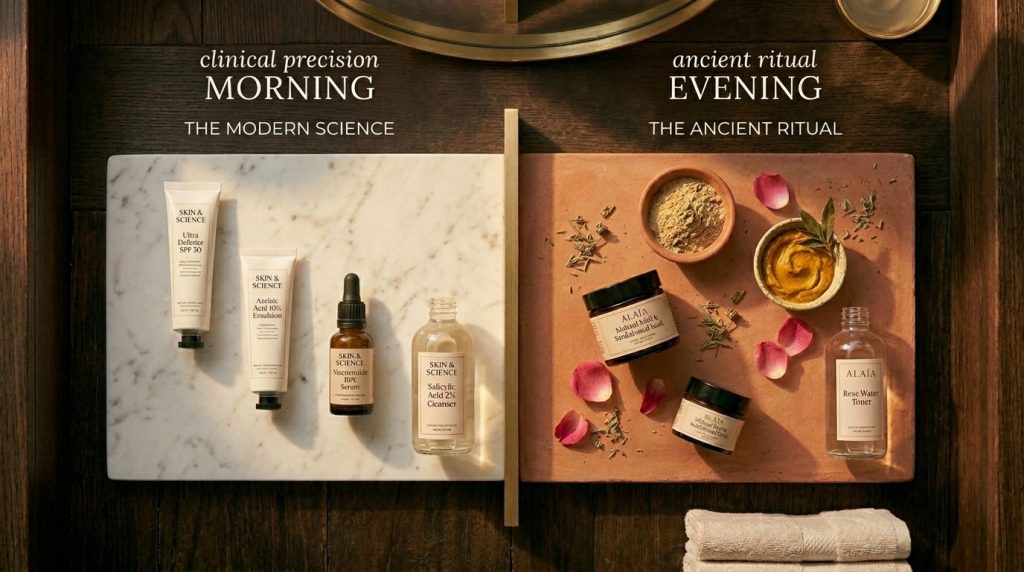
- Niacinamide (2–10%) — regulates oil production, fades post-inflammatory hyperpigmentation (the dark marks acne leaves behind), reduces pore appearance. A true PMOS hero ingredient. Works for all skin tones. Universally well-tolerated
- Azelaic acid (10–20%) — anti-inflammatory AND anti-bacterial AND helps with pigmentation. Particularly brilliant for dark-skinned women who deal with PIH after hormonal breakouts
- Salicylic acid (0.5–2%) — exfoliates inside the pore, clears congestion. Use in your cleanser rather than a leave-on if your skin is sensitive
- SPF, every single day — hormonal acne marks darken significantly with sun exposure. SPF is the most important step in your entire routine. Not optional
Indian skincare that genuinely complements clinical actives:
Multani mitti (Fuller’s Earth) masks — genuinely absorbing, oil-controlling, and soothing. Use once a week. Turmeric and honey spot treatment — turmeric is anti-inflammatory, honey is antimicrobial. Leave on for 15 minutes. Rose water as a toner — cooling, mildly anti-inflammatory, sets the skin beautifully before moisturiser.
Makeup for PMOS skin: A skin-tint or serum foundation rather than full coverage lets the skin breathe. A green colour corrector under your foundation neutralises redness around active breakouts. A good setting spray — Urban Decay All Nighter, or Huda Beauty’s — keeps everything in place without clogging. On days when your skin needs to breathe completely, tinted SPF and a bold lip is genuinely a full look.
And for the last time, from me to you: please see a dermatologist. PMOS acne responds dramatically better to treatment when it’s addressed hormonally AND topically together. A good dermatologist and gynecologist working in tandem is not a luxury. It’s what you deserve.
When Your Body Feels Unfamiliar
This is the hardest one. When PMOS changes your weight distribution — particularly around the midsection, where insulin resistance tends to cause fat to accumulate — getting dressed can feel like confronting a stranger in the mirror.
I want to sit with this one for a moment before we get to the styling tips. Because this particular challenge — dressing a body that feels unfamiliar — is one I understand personally.
There are days when nothing in my wardrobe feels right. Not because my style has changed or my taste has shifted, but because my body has — quietly, without asking — and the clothes haven’t caught up yet. It’s a strange kind of grief, actually. Missing a version of yourself you didn’t even know you were attached to.
What I’ve learned, slowly and imperfectly, is that fighting that feeling never works. What works — on most days — is choosing one piece of clothing that feels genuinely good right now. Not aspirational. Not “when things settle down.” Right now. And building the outfit around that one good feeling.
It’s a small thing. But small things add up. 🌸
I’m not going to tell you to “love every inch” right now. That’s not always where you are, and that’s okay.
What I will tell you is this: you are not dressing a problem body. You are dressing a body that is working extremely hard under significant hormonal pressure. It deserves clothes that respect it today, not clothes that punish it into compliance.
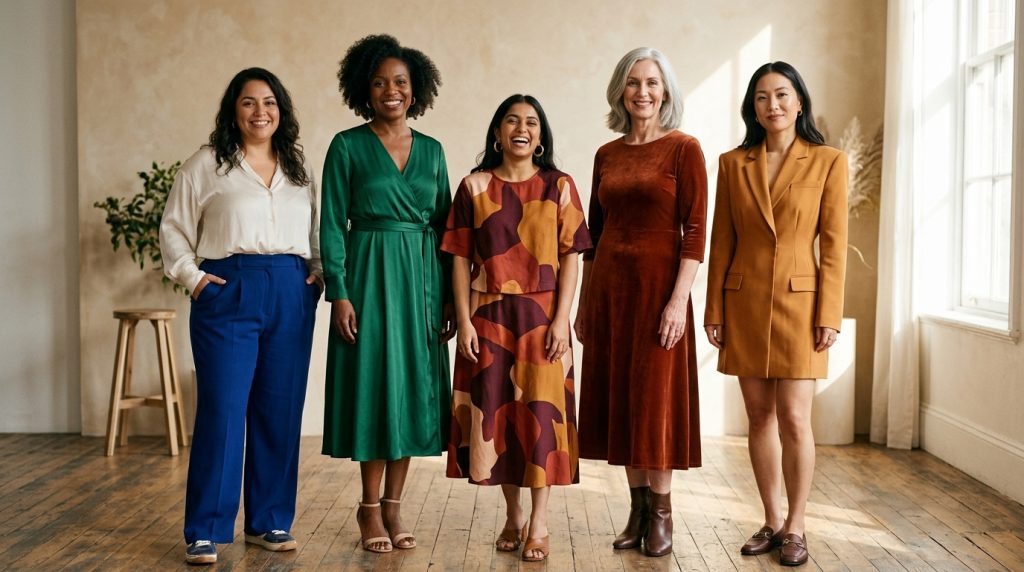
The silhouette formula for unfamiliar body days:
- High-waisted bottoms with a relaxed top — gives structure and support at the midsection without constriction
- Wrap styles in beautiful fabrics — adjustable, flattering, and they never fight your body
- Rich, deep colours — jewel tones (emerald, cobalt, burgundy) and warm earthy palettes (terracotta, rust, ochre) communicate confidence before you’ve said a single word
- Bold prints — a person wearing a striking print is visually interesting. People look at the print, the colour, the pattern — not specifically at any one part of the body
- The fit rule that overrides everything: clothes that fit your current body, right now. Not aspirational sizing. Not comfort-only sizing. Clothes that say: I am here, I look good, I know it.
Colour Therapy — Because What You Wear Genuinely Changes How You Feel
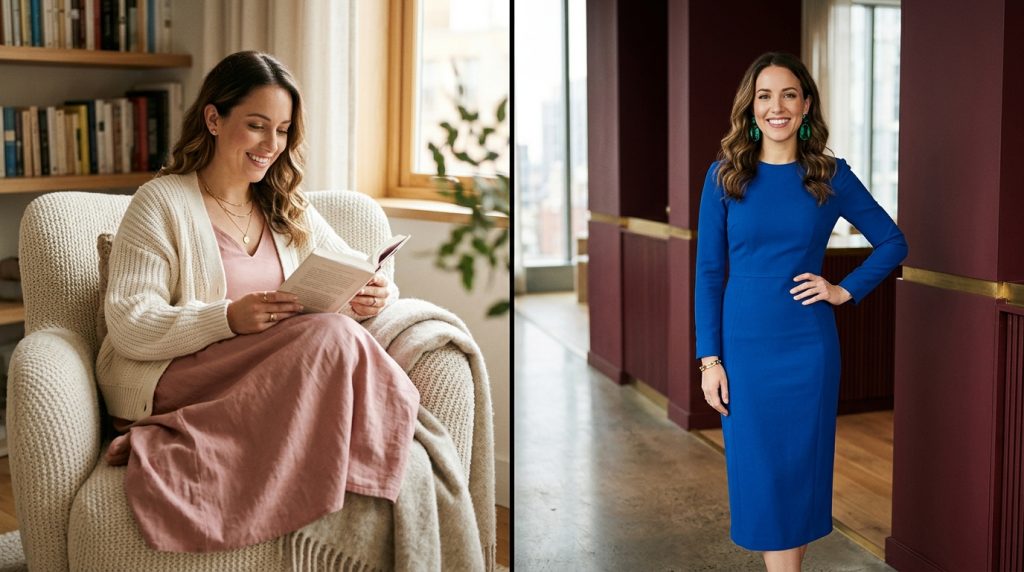
This is not woo. Colour psychology is real, documented, and something fashion designers, interior designers, and therapists have understood for decades. And on a PMOS day — when you don’t feel like yourself and you need something to carry you — colour is a tool.
Check in with yourself right now. How do you actually feel? Then scroll to your colour.
😔 Low energy. Foggy. Can’t seem to start.
Your colour: warm terracotta, burnt orange, ochre, golden yellow
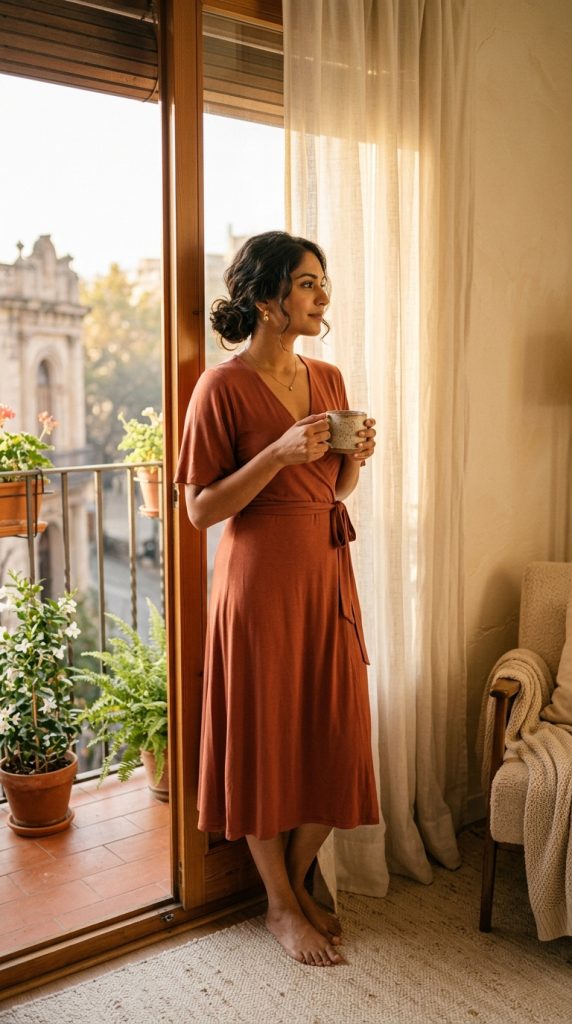
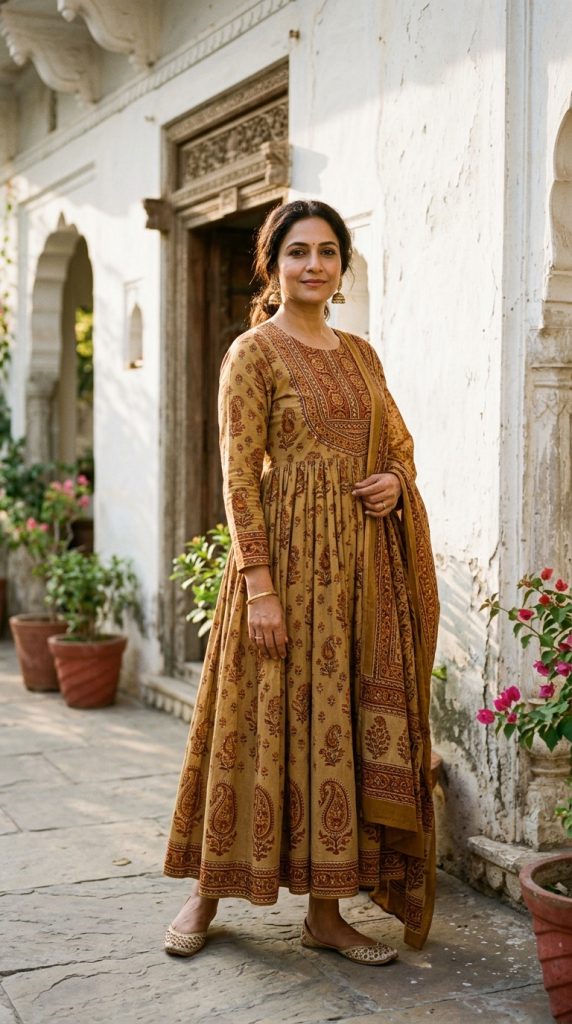
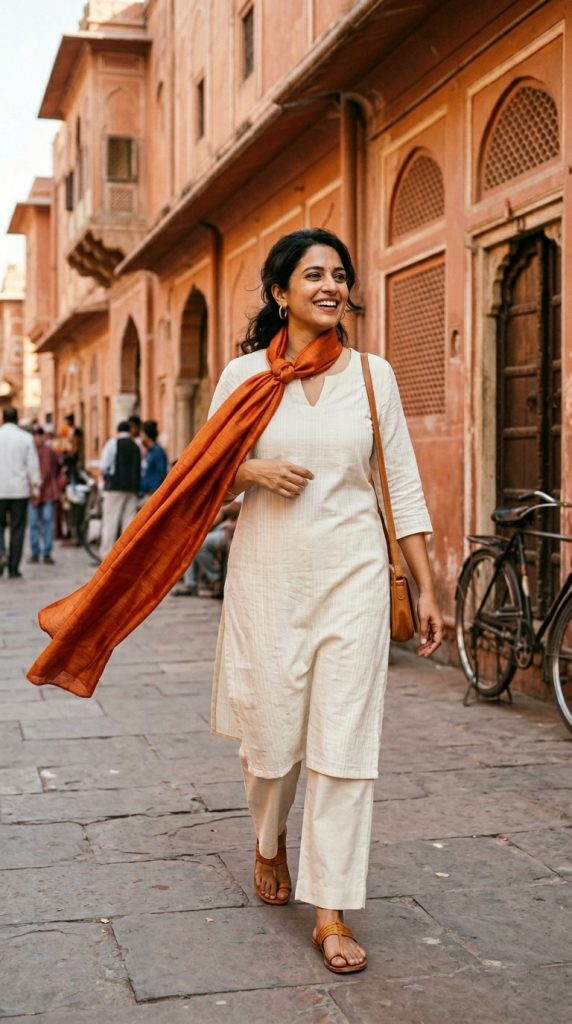
Why: These are sun-adjacent colours — warm, energising, grounding. They communicate vitality even when you don’t feel it yet. Wearing warm colour can genuinely shift your internal temperature upward.
How to wear it: One warm piece is enough. A wrap dress in terracotta. An oversized ochre knit. A burnt orange silk scarf tied at the neck.
Indian picks: Fabindia’s terracotta kurtas. A Jaypore block-print in earthy gold.
Global picks: Zara’s mango-palette dresses, H&M’s warm-toned linen range.
😤 Frustrated. Inflamed. Everything is annoying.
Your colour: soft sage green, mint, sky blue, powder blue
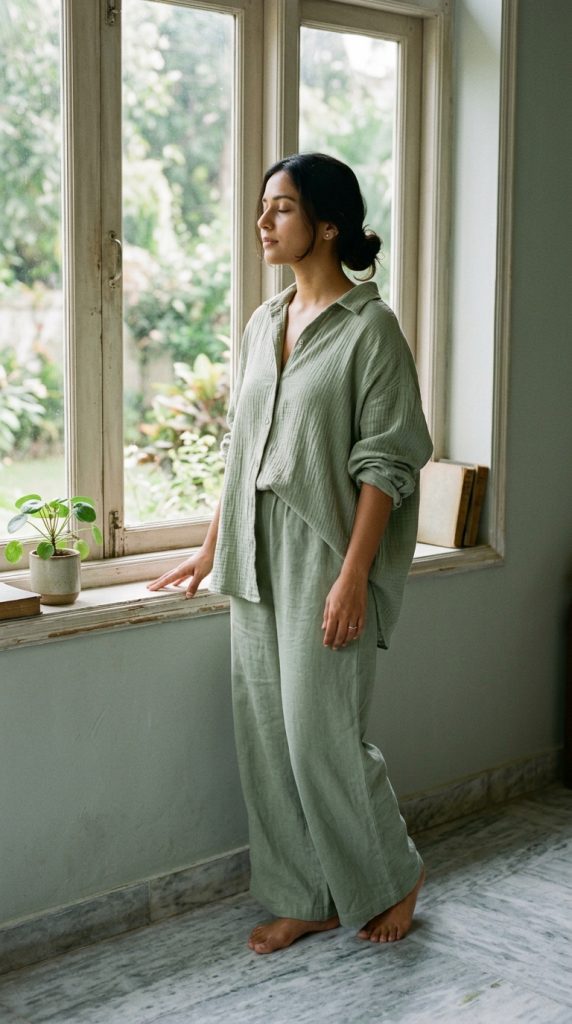
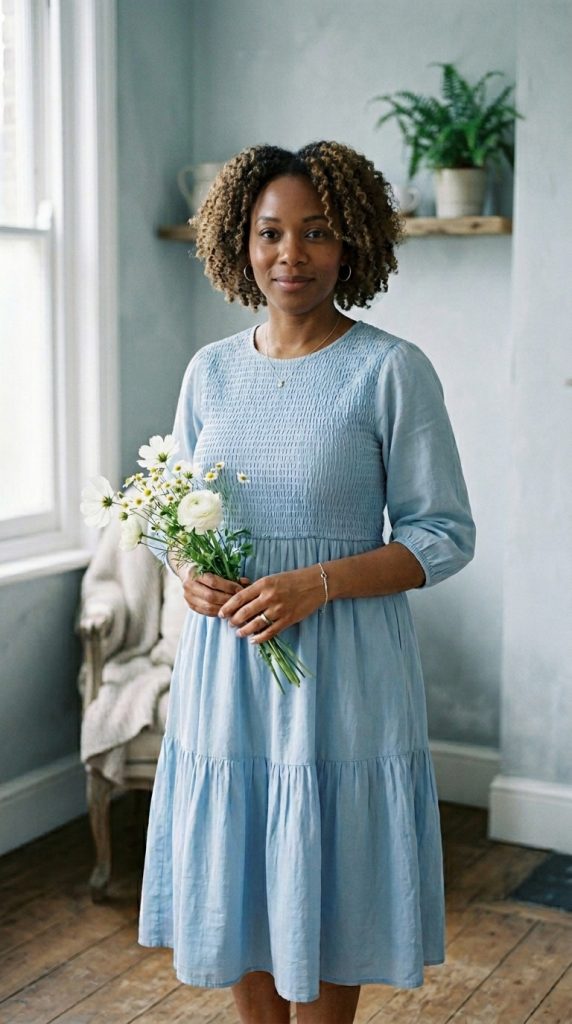
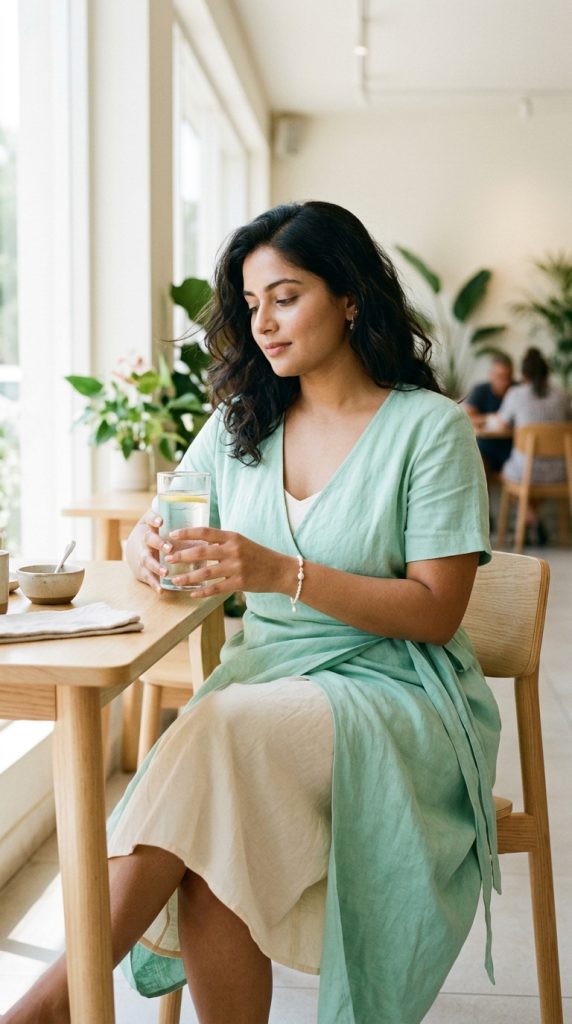
Why: Cool colours are physiologically calming — they literally lower visual temperature. When PMOS inflammation is both internal and emotional, wearing something cool and soft creates a kind of external soothing.
How to wear it: Head-to-toe soft neutral, or one statement piece in a cool tone against a white or cream base.
😰 Anxious. Overwhelmed. Just need the day to be gentle.
Your colour: blush rose, dusty pink, ivory, warm cream
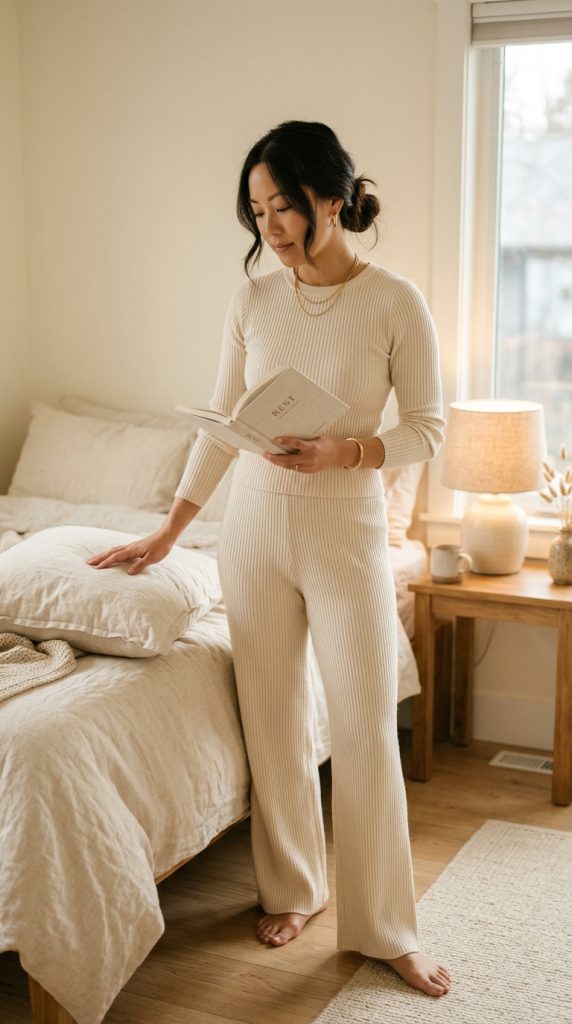

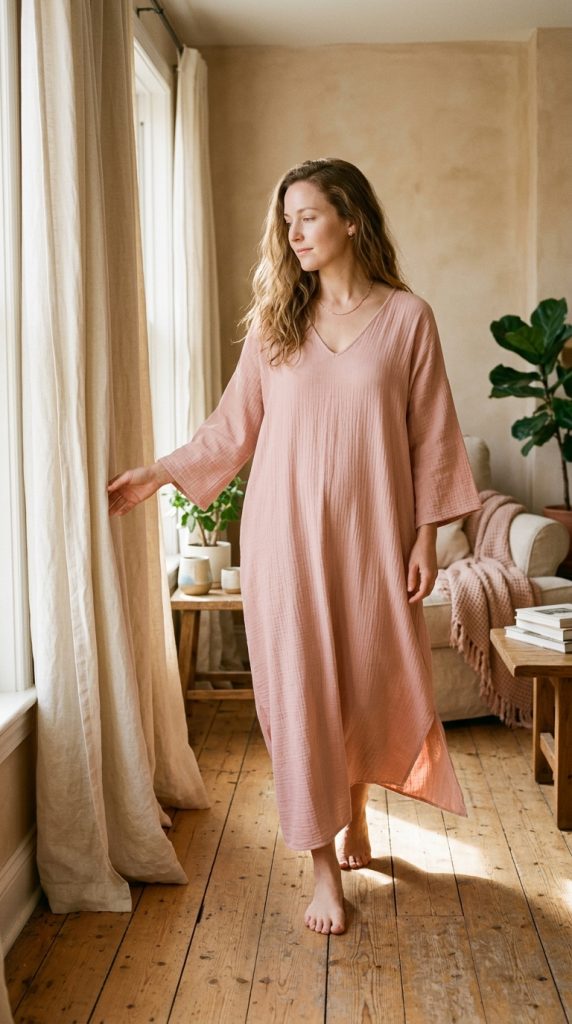
Why: These are the colours that feel like a hug. Soft, enveloping, non-confrontational. On days when the world feels too loud, dressing in gentle tones turns your outfit into a cocoon.
How to wear it: A soft blush cotton maxi. An ivory smocked dress. A cream ribbed set with your softest jewellery.
✨ Having a rare good day. Energy is there. You feel like you.
Your colour: bold cobalt blue, deep emerald green, rich burgundy, true red
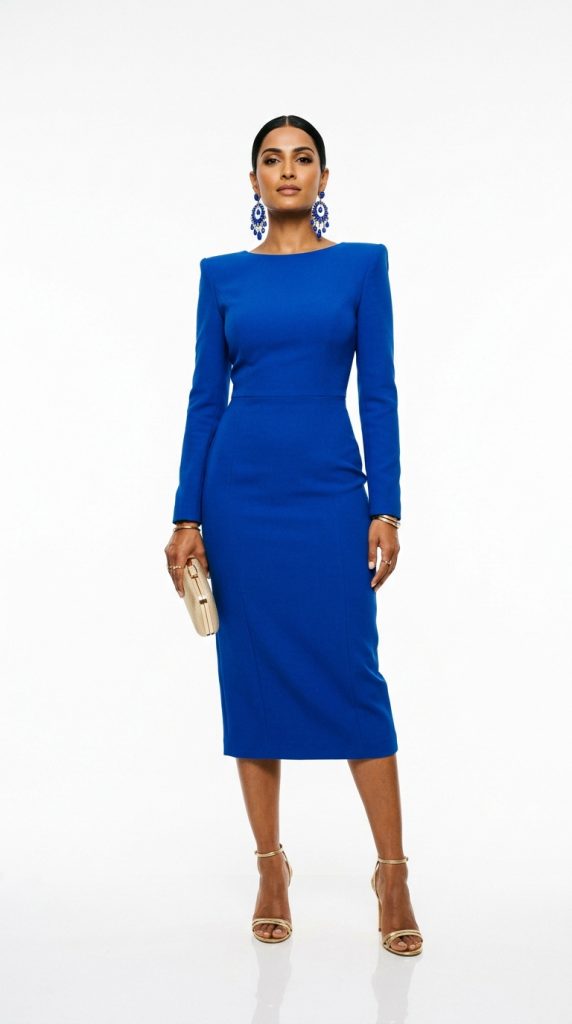
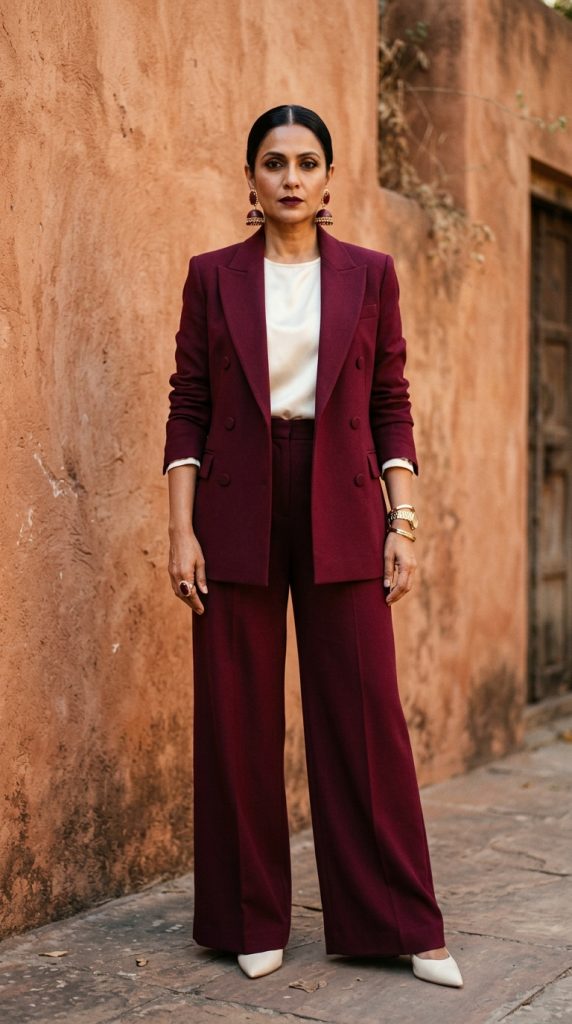
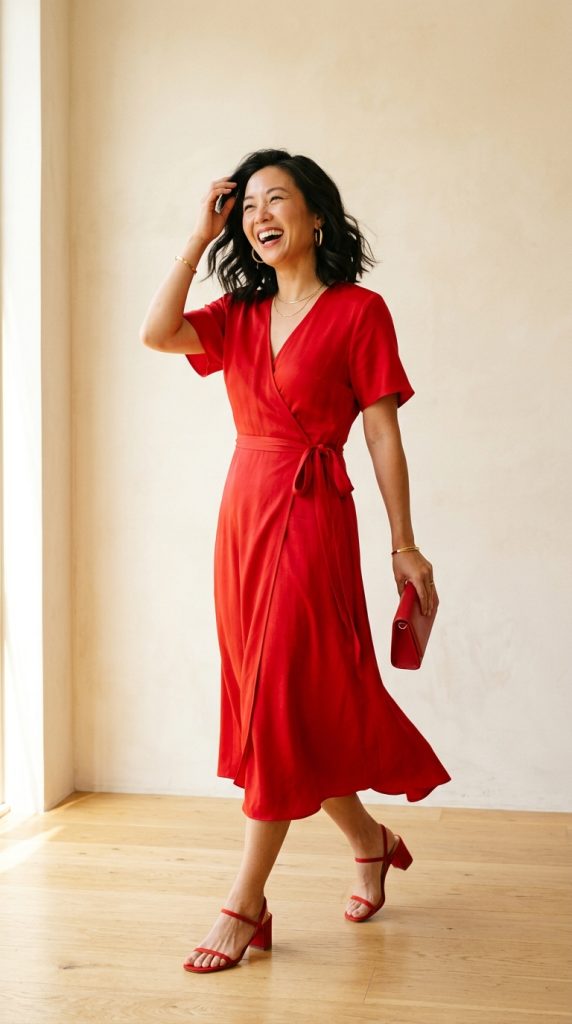
Why: Amplify what’s already there. Don’t save your best colour for someday. Today is someday. Wear it.
How to wear it: Your most statement outfit. The one you keep for “when I feel good enough.” Wear it today.
🌙 Quiet. Inward. Not bad, just contained.
Your colour: deep navy, chocolate brown, charcoal, deep plum
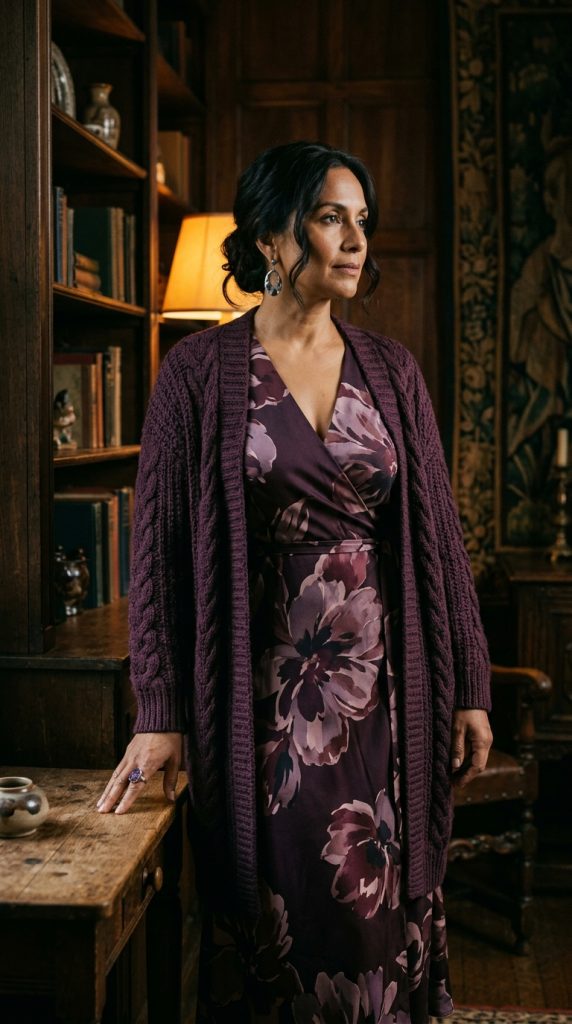

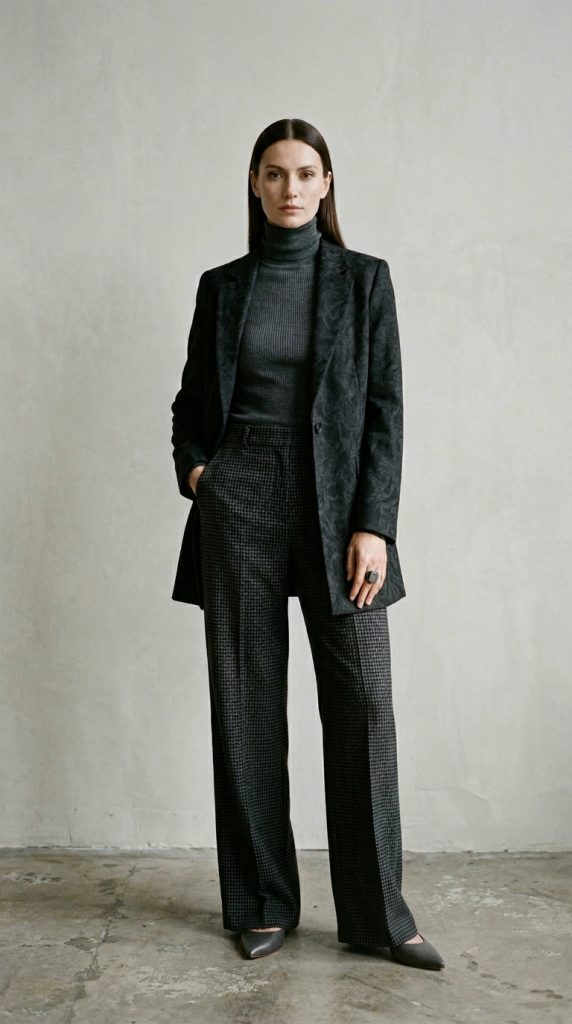
Why: Dark, rich tones are dignified and contained. They don’t demand anything from you or from the room. They’re confident without being loud.
How to wear it: A monochrome deep-tone look. Minimal accessories. Let the depth of the colour do the work.
Your PMOS Glow-Up Rituals — Mind, Body & Being
These are not generic wellness tips. They’re specific, practical, and grounded in what actually works for PMOS bodies and minds.
The Morning Ritual That Changes Everything
Start with two minutes of gentle lymphatic face massage before you wash your face. Use your fingertips, working from the centre outward and downward toward the lymph nodes at the jaw and neck. PMOS can cause facial puffiness due to hormonal fluid retention — this actually moves it. Add a drop of kumkumadi tailam or rose hip oil to make it feel luxurious. It takes two minutes and it is the most underrated skincare step in existence.
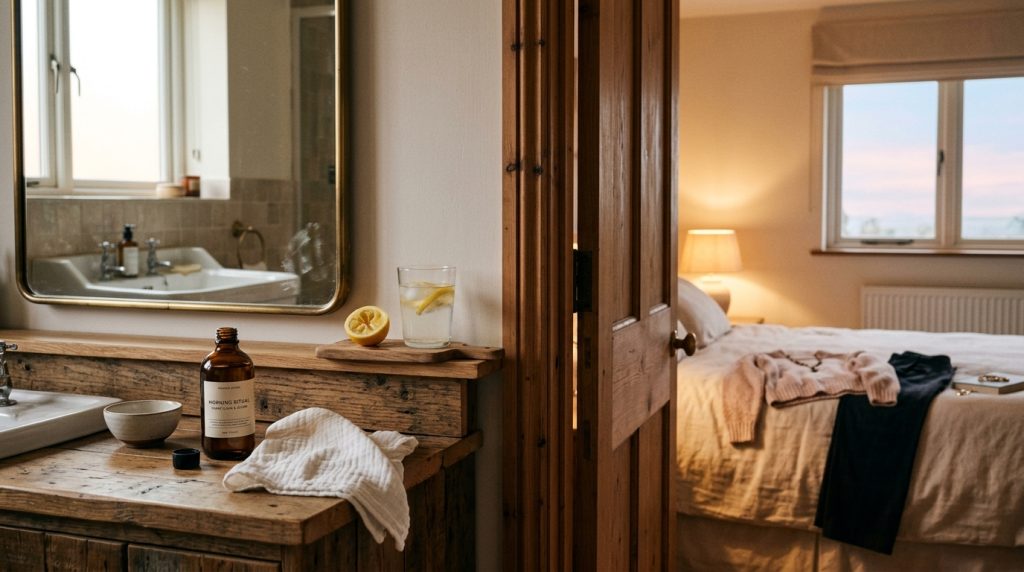
Warm lemon water before your first coffee — yes, it is boring advice, but it’s boring because it works. Lemon water supports the digestive system and mildly supports insulin sensitivity. Coffee on an empty stomach spikes cortisol. And cortisol is the enemy of PMOS management.
Choose your outfit the night before. Particularly on PMOS days when bloating fluctuates and decision fatigue is real. Lay it out. Accessories included. Remove the morning’s biggest variable before the morning even starts.
One affirmation that isn’t toxic positivity: “My body is working hard for me today.” Not “I love every inch of myself.” Not “I am perfect as I am.” Just — my body is working hard. Because it genuinely is.
Movement That Heals Rather Than Punishes
This one might be the most important section in this entire post.
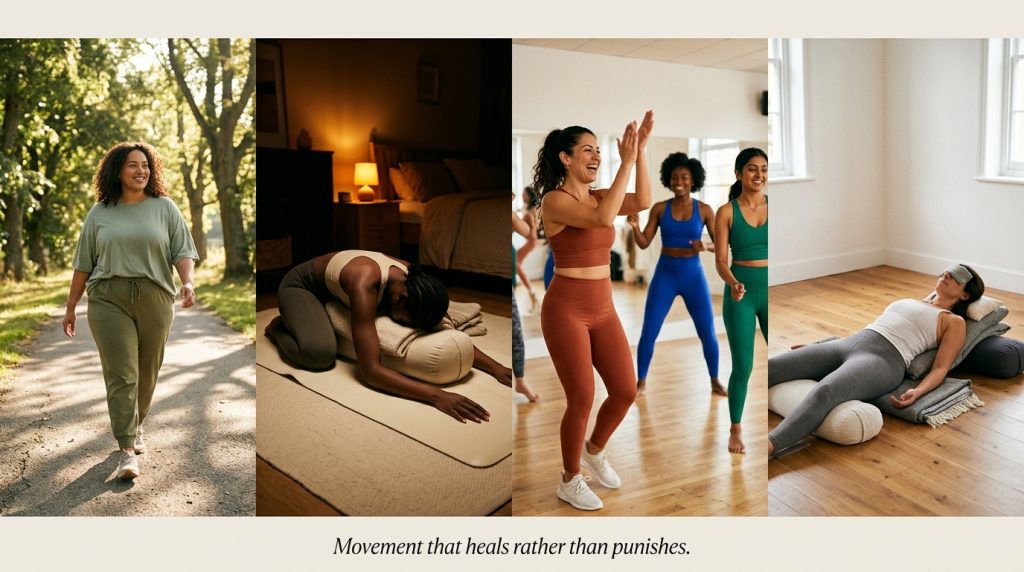
Regular physical activity can improve mood and boost confidence — find an exercise routine that you enjoy, whether it’s yoga, dancing, or walking. This is true. But here’s what most wellness content gets wrong about PMOS and exercise: high-intensity training every single day actually raises cortisol levels, and elevated cortisol worsens insulin resistance. PMOS bodies respond better to lower-cortisol movement, done consistently, than to punishing daily HIIT sessions.
What actually works: a 30-minute brisk walk + 10 minutes of yin yoga before bed. Every day. Sustainable, cortisol-friendly, genuinely effective for insulin sensitivity.
What also works: Zumba, Bollywood dance classes, swimming, pilates. Movement that feels like joy rather than punishment. The research on joyful movement and hormonal health is clear — exercise you enjoy is exercise you actually do. And exercise you actually do is what changes your body’s insulin response over time.
Global context: pilates studios in major cities worldwide now offer PMOS-specific programming. Indian yogashala traditions — particularly the slower, restorative practices — have understood low-cortisol healing movement for thousands of years. Both are correct.
The Evening Wind-Down That Matters More Than You Think
Silk pillowcase. Buy one. Sleep on it every night. This is not influencer content — reduced friction means reduced mechanical hair breakage overnight, and reduced friction on the skin means fewer sleep creases and less irritation on already-sensitive PMOS skin. It costs roughly ₹800–₹2,000 depending on where you buy it. It pays for itself within a month.
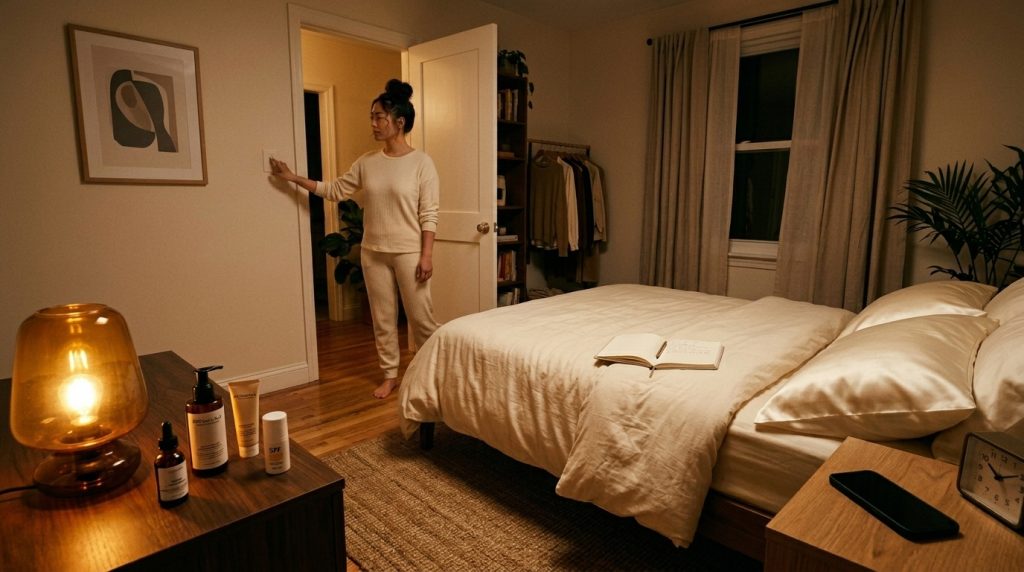
Your evening skincare, in five steps: gentle cleanser, niacinamide, azelaic acid, moisturiser, then lay out your SPF to apply in the morning. That’s it. PMOS skin does not need a fifteen-step routine — it needs consistent, targeted actives applied with patience.
Ten minutes of writing before sleep. Not a gratitude list. Specifically: what did I do today that I’m glad I did? This question is specifically about your actions, not your feelings or your body. It builds self-efficacy — the belief that you have agency — which is exactly what chronic health conditions chip away at.
Screens off 45 minutes before sleep. Cortisol regulation is foundational for PMOS management, and screens delay melatonin production and keep cortisol artificially elevated. This is one of the hardest habits to build and one of the most impactful.
The Mental Care Nobody Talks About Enough
Women with PMOS experience greater body dissatisfaction than those without, and strategies need to be implemented to address these concerns. That’s the clinical way of saying what you feel when you look in the mirror is real, it is documented, and it deserves to be taken seriously.
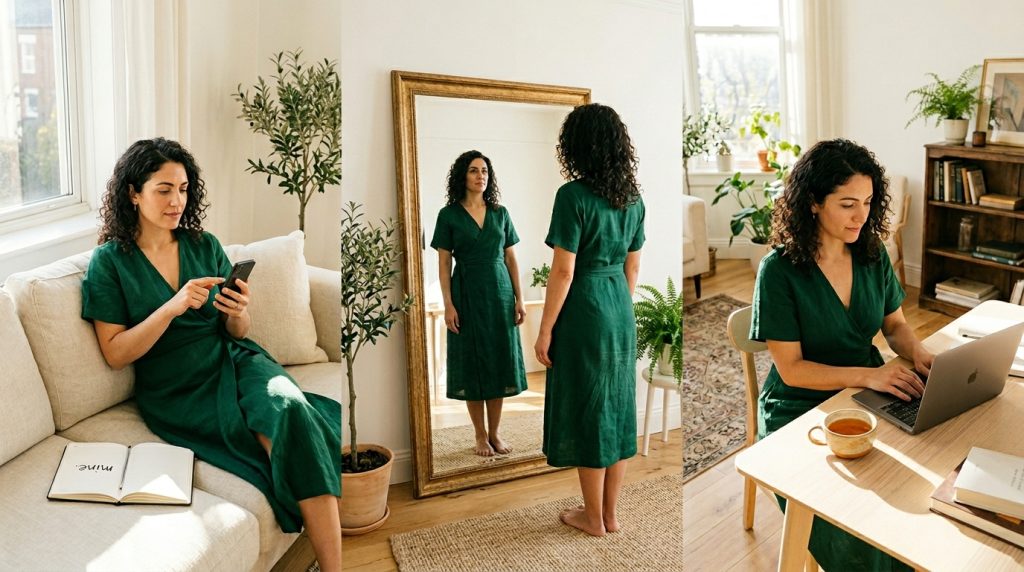
A few things that genuinely help:
Curate your feed ruthlessly. Unfollow any account that makes your body feel like a problem to be solved. This is not avoidance — it’s environmental design. You cannot heal in an environment that is constantly telling you you’re broken.
The body-neutral mirror ritual. When you get dressed, ask yourself two questions only: is this comfortable, and do I feel like myself in it? Not — do I look thin? Not — is this hiding the right things? Those are the wrong questions. They lead to dressing as a form of apology. You are not apologising to anyone.
Find your people. PMOS communities exist in India and globally — online and in person. Verity in the UK, PCOS Society of India, Cysters, various Instagram communities built around hormonal health. You do not have to figure this out alone. You were never supposed to.
🌸 Komal’s Tip
“Nobody told me — when I first heard about PCOS, (now that’s PMOS) — that the hardest part wouldn’t be the symptoms. It would be the feeling that my body had become something I was fighting against rather than living in. The styling tips in this post are real and they work. But the most important thing I can tell you is this: you are not a before photo. You are not a work in progress waiting to become acceptable. You are a woman navigating something genuinely hard, and you deserve to dress like you know that. Because you do.” 🌸
The PMOS Wardrobe Essentials — Global + India Edition
Save this section. Screenshot it. Share it with someone who needs it.
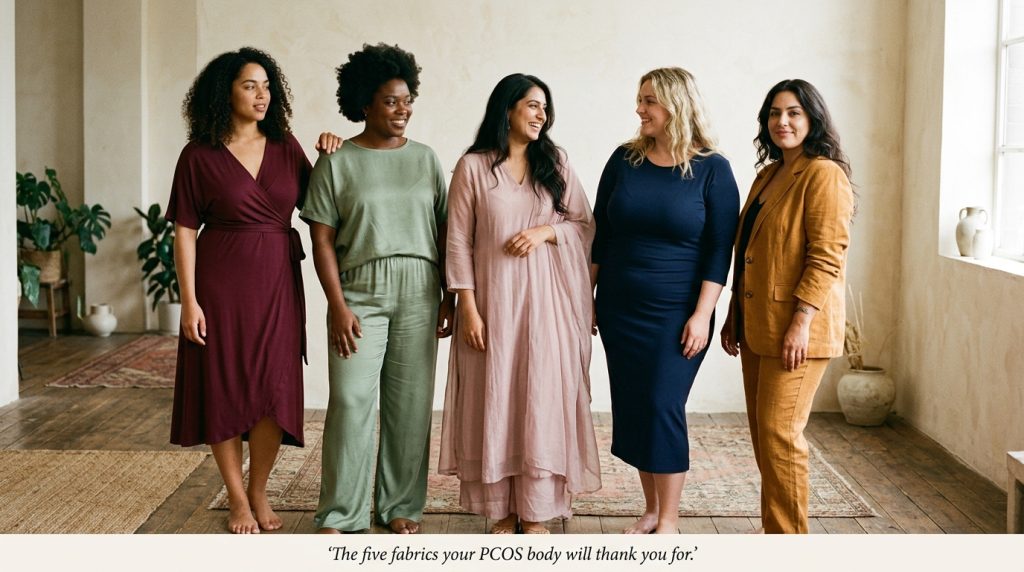
The Five Fabrics Your PMOS Body Will Thank You For
Modal — the softest fabric you will ever put against inflamed or sensitive skin. Drapes beautifully, stretches with the body, doesn’t cling. A modal wrap dress is the PMOS wardrobe’s greatest gift.
Bamboo cotton — thermoregulating, antimicrobial, incredibly soft. Particularly good for women whose PMOS causes temperature sensitivity or night sweats.
Mulmul (muslin/cotton voile) — India’s gift to summer dressing. Ultra-light, floats on the skin, breathes in heat and humidity. The only fabric that makes a 40°C afternoon survivable.
Jersey — the stretchy, forgiving workhorse. Never fights a bloated midsection. Never creases. Never looks like it’s trying too hard. Every PMOS wardrobe needs at least two jersey pieces.
Linen-cotton blend — structured enough to look intentional, relaxed enough to wear comfortably. The crossover fabric between polished and comfortable.
The Six Silhouettes for Every PMOS Day
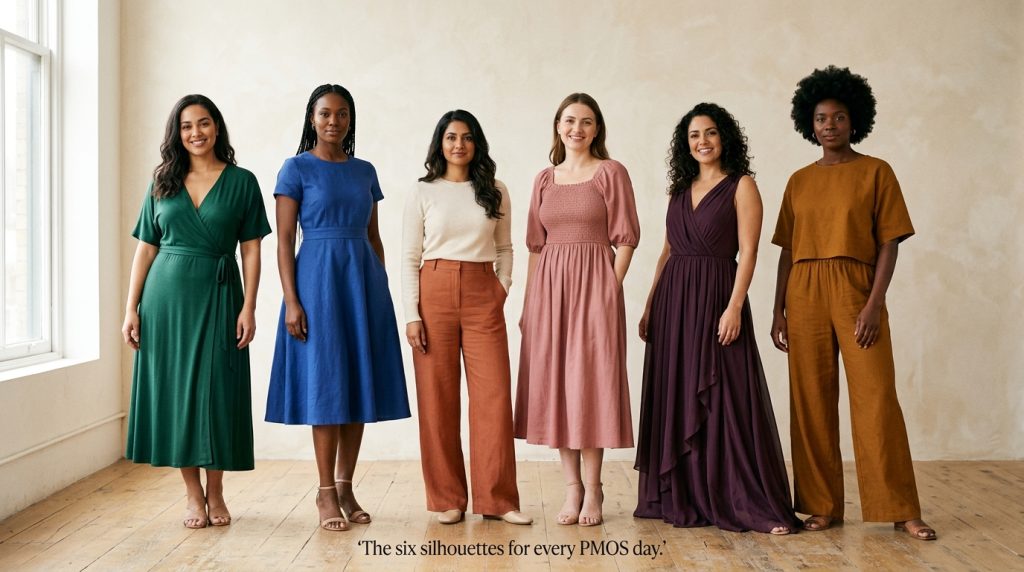
Wrap dress — buy one quality wrap dress and wear it on rotation. Adjustable, forgiving, always looks intentional. Best in modal or jersey.
A-line midi — creates a defined waist without touching it. Universally flattering. Works for college, work, brunch, and festive occasions with the right accessories.
Wide-leg trousers — styled with a tucked-in top or a structured knit, these read as effortlessly chic. Elasticated waist versions are your PMOS best friend.
Smocked top or dress — the bodice fits right now. The rest flows freely. No waistband, no restriction, no problem.
Flowy maxi dress — particularly in mulmul or chiffon. On a really hard day, a maxi dress is the most elegant, most forgiving thing you can put on your body.
Co-ord sets with an elasticated waist — the matching-set illusion of being put together, without any of the waistband struggle.
The Accessory Toolkit That Does Heavy Lifting
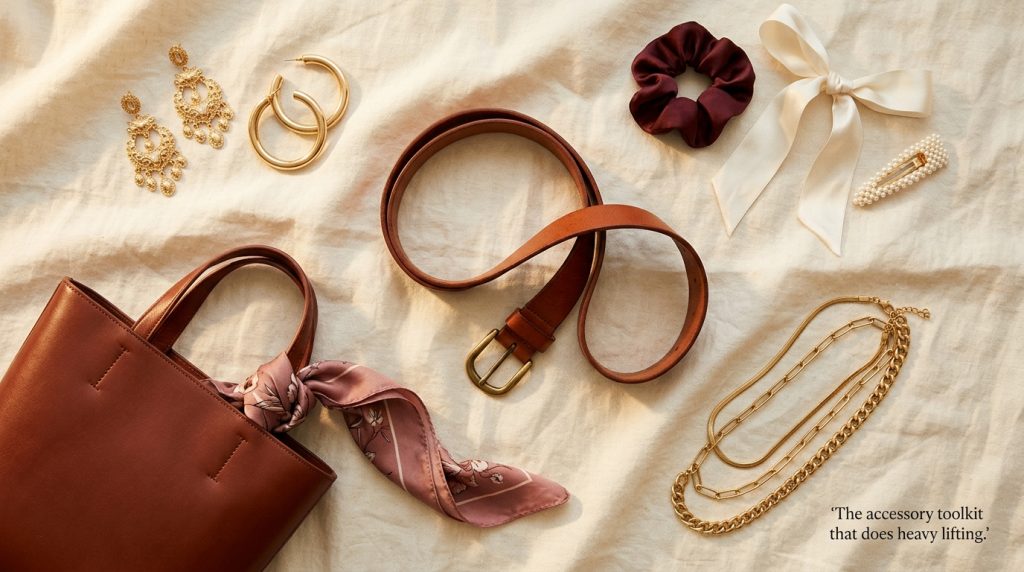
Statement earrings — on days when you’d rather not think about your body, draw the eye upward. Oversized hoops, chandelier jhumkas, bold geometric clips. Eyes go to the face. This is not a trick — it’s just how attention works.
Silk hair accessories — satin-lined scrunchies, silk ribbons, embellished clips. Make your hair situation look intentional every single time.
A belt, optionally — when you want waist definition, add a soft belt. When you don’t, leave it off. Having the option is the whole point.
A bag that makes you feel like a million rupees — it doesn’t have to be expensive. It has to be the one you reach for and feel a small spike of pleasure. That bag exists at every price point.
Layered necklaces — draw the eye to the neckline and décolletage. Create visual interest in the upper body on days when you’re not connecting with the lower half.
Where to Shop — India + Global
India:
- Fabindia — beautiful natural fabrics, mulmul, handloom cotton, block prints. The PMOS wardrobe’s greatest ally
- W for Women — consistently great jersey, wrap styles, and comfortable everyday dressing in Indian sizing
- Global Desi — bold prints, flowy silhouettes, consistently good quality
- Anita Dongre — for when you want something special that tells a story
- Myntra and Ajio — widest range, best return policies, filter by fabric type
Global:
- Uniqlo — the modal and AIRism ranges are extraordinary for PMOS bodies. The wrap dresses last for years
- COS — clean silhouettes in good fabrics. A-lines and wide-leg trousers in particular
- H&M — smocked dresses, jersey wraps, and linen blends at accessible prices
- & Other Stories — for investment pieces that feel genuinely considered
FAQs — Honest Answers to Real PMOS Questions
What exactly is PMOS and how is it different from PCOS?
PMOS stands for Polyendocrine Metabolic Ovarian Syndrome. It’s the new official name — announced May 12, 2026 — for what was previously called Polycystic Ovary Syndrome (PCOS). The condition is the same. The name is more accurate: it describes the hormonal (endocrine) and metabolic nature of the disorder, rather than focusing on ovarian cysts that often aren’t actually present.
How do I dress to feel confident with PMOS bloating?
Wrap dresses, smocked bodices, A-line silhouettes, and wide-leg trousers with elasticated waists are your best friends. Choose fabrics that stretch and breathe — modal, jersey, mulmul — and avoid rigid waistbands on difficult days. The goal is clothes that adjust to your body, not the other way around.
What hairstyles work best with PMOS-related hair thinning?
Curtain bangs disguise hairline thinning beautifully. Soft buns at the nape of the neck create volume at the crown. Loose waves give the illusion of density. Moving your hair parting slightly off-centre breaks the thinning pattern visually. Silk scrunchies and satin-lined accessories reduce mechanical breakage.
What skincare routine actually helps with hormonal acne?
Niacinamide (regulates oil, fades dark marks), azelaic acid (anti-inflammatory, excellent for darker skin tones), and SPF (if it suits your skin) every single day are the three non-negotiable actives for PMOS skin. See a dermatologist — PMOS acne responds best when treated hormonally and topically at the same time.
Can styling really help with PMOS confidence — or is it just superficial?
It’s not superficial at all. Research on enclothed cognition — the psychological effect of what we wear — consistently shows that clothing affects mood, self-perception, and behaviour. Getting dressed intentionally, in clothes that fit and feel good, is not vanity. It’s an act of self-respect that has measurable effects on how you move through the world.
What movement is best for PMOS healing?
Lower-cortisol movement — walking, yoga, swimming, pilates, dance — is better for PMOS bodies than daily high-intensity training, which can raise cortisol and worsen insulin resistance. A 30-minute brisk walk plus gentle yoga, done consistently, is more effective for PMOS management than punishing HIIT sessions done sporadically.
Where do I start if I’ve just been diagnosed with PMOS?
Build your medical team first: a gynecologist, ideally with PMOS experience, and a dermatologist if you have skin and hair concerns. Then: read everything you can from reputable sources (the Endocrine Society’s PMOS guidelines are freely available). Connect with a community — Cysters, PCOS Society of India, Verity UK. And give yourself some grace. This diagnosis is not a verdict. It’s a starting point.
A Note From Komal — Because You Deserve to Read This
I debated how much to share in this post. Whether to keep it strictly informational — here are the tips, here are the products, here’s the science. Clean and helpful and a little bit safe.
But that felt dishonest. Because the reason I wrote every word of this guide is personal.
I’m somewhere in the middle of my own PMOS journey. Not at the beginning where everything is confusing and overwhelming, but not at a place where I have all the answers either. I’m in the messy, unglamorous middle — learning my body’s patterns, figuring out what works and what doesn’t, having good skin weeks and difficult hair months, wearing the wrap dress on the hard days and the bold cobalt on the good ones.
The struggles this condition brings are so often invisible. Nobody sees the twenty minutes you spent getting dressed before you walked out looking completely put together. Nobody knows that the outfit you’re wearing was chosen specifically because nothing else fit comfortably today. Nobody sees the mirror moments, the fatigue behind the foundation, the quiet frustration of a body that doesn’t always behave the way you’d like it to.
I see it. Because I live it too.
This guide is not written from the other side of healing. It’s written from right here, in the middle of it, by someone who genuinely believes that taking care of how you dress, how you move, how you speak to yourself in the mirror — these things matter. They’re not trivial. They’re not vanity. They are acts of self-respect on the days when self-respect is the hardest thing to find.
You deserve those acts. Every single day.
And on the days when that feels like too much — come back here. We’ll figure out the outfit together. 🌸
Are you navigating PMOS? Tell me in the comments — what’s your biggest styling or self-care challenge right now? I genuinely read every comment and I’d love to help you figure it out. 💛
And if this post helped you feel even a little more seen — please share it. Post it in your PMOS WhatsApp group. Send it to your sister. Save it for a day when you need it. Someone in your life is standing in front of their wardrobe right now feeling exactly the way this post was written for. Give it to her. 🌸